
MetaMask, formerly Consensys Software Inc, is the world's largest self-custodial financial platform, giving people a single place to hold, spend, save and grow their money across both crypto and traditional assets. The company is building the consumer platform where that happens, bringing payments, savings, investing and digital assets together in one seamless experience. Having grown from the world's most widely used self-custodial wallet, MetaMask gives users direct control over their money and assets, with reach across approximately 190 countries. MetaMask has played a foundational role in Ethereum's growth since 2016. Today, MetaMask sits at the center of the blockchain economy, building the operating system for Open Money and putting people in full control of their financial lives.
Read all articles
A crypto price tracker is a tool that shows live prices, charts, market caps, and trading data for cryptocurrencies, pulling figures from many exchanges into one view. The best-known trackers in 2026 include wallet-native price pages such as MetaMask's, independent aggregators CoinGecko and CoinMarketCap, and the price pages built into centralized exchanges like Coinbase, Kraken, and Binance. Choosing the best price tracker is a personal decision, many traders use the following considerations: the ability to check a price and act on it in self-custody, the widest asset coverage, or the deepest exchange and historical data. Each is evaluated below on the same factors.
Disclaimer: This guide is for educational purposes only. It is not financial advice, not a solicitation, and not for UK audiences. Cryptocurrency prices are volatile and crypto is not suitable for all users.
What a crypto price tracker actually does
A crypto price tracker collects market data (the current price, 24-hour change, market cap, trading volume, circulating supply, and price history) for a large set of tokens and blockchain networks. Aggregators like CoinGecko and CoinMarketCap pull token prices from hundreds of exchanges and average it into a single reference price, which is why their figure for a coin can differ slightly from the price on any one exchange. Exchange price pages, by contrast, show that exchange’s own order-book price. Wallet-native price pages, like MetaMask’s asset pages, sit in between: they show a reference price and chart, then connect to what a self-custodial wallet can do with the asset.
None of these are the same as a portfolio tracker, which follows the value of holdings a person actually owns, though several of these tools include that feature. This guide focuses on tools for checking and comparing market prices.
How crypto price trackers were evaluated
Each tracker is assessed on 5 consistent factors:
Asset coverage: how many tokens the tool lists, and whether it counts curated listings or all onchain tokens.
Data depth: exchange coverage, historical range, and extras like derivatives, onchain, or NFT data.
Neutrality: whether it’s a neutral aggregator or shows a single venue’s own price.
What you can do next: whether checking a price leads straight into buying, swapping, or moving the asset, or ends at the chart.
Access and cost: free web access, account requirements, and any geographic restrictions.
Top crypto wallet and centralized exchange price trackers
MetaMask in-app price pages are wallet-native: they show a reference price, chart, market cap, circulating supply, and history for a token, and then connect that view to what a self-custodial wallet can do with the asset, such as swapping across networks or bridging without a custodial account. Because MetaMask is a self-custodial wallet rather than an exchange, the price page is a neutral reference view rather than a single venue’s order-book price, and acting on it keeps assets in the user’s own custody. Coverage spans the tokens supported across the networks MetaMask connects to, which is narrower than the big aggregators’ curated lists, so a user tracking thousands of long-tail tokens will still reach for CoinGecko or CoinMarketCap. Suited to self-custody users who want to check a price and move straight into swapping or bridging without handing assets to a custodian.
Rabby is an EVM-focused, open-source self-custody wallet from the team behind DeBank, supporting major EVM networks like Ethereum, Optimism, Arbitrum and more. It shows holdings and live token values in one view, and is free to use as a browser extension, desktop app, or mobile app. Suited to active EVM and DeFi users who want a single view of what they hold across many chains.
Phantom is a consumer self-custody wallet that began on Solana and has expanded to ~8 networks, including Solana, Ethereum, Base, and Bitcoin, showing holdings and token prices for the assets a person keeps in one cross-chain view. It is free, available as a mobile app and browser extension, and links a balance straight into swapping without a custodial account. Suited to users who move between Solana and EVM networks and want their holdings and prices in one place.
Trust Wallet is a mobile-first, self-custody wallet that supports major networks, including Bitcoin, Ethereum, and Solana, with a simple balance-and-price view of what a user holds. It is free on both mobile and as a browser extension, and keeps assets in the user’s own custody rather than on an exchange. Suited to users who want wide chain coverage and an uncomplicated holdings-and-price view.
Coinbase shows price pages for the assets it lists, drawn from its own US-regulated exchange rather than a cross-exchange average. Coverage is narrower than the aggregators because it reflects Coinbase’s own listed assets, but the prices connect directly to buying and selling for account holders. Coinbase is available in the US and many other markets, with availability varying by region, so check current eligibility. Suited to users already trading on Coinbase who want one venue’s price and the ability to act on it, and who accept a custodial account.
Kraken likewise publishes price pages for its listed assets based on its own order book, with a reputation for strong security and detailed market data for active traders. Like Coinbase, it’s a custodial exchange, so the price and the trade live in the same account. Suited to traders who use Kraken and want its native price data.
Binance runs price pages backed by the largest spot trading volume in the market, which makes its prices a common reference for widely traded pairs. Availability differs sharply by country: Binance.US is a separate, more limited entity for US users, and access is restricted or unavailable in several jurisdictions, so any figure or feature should be checked against the version available in the reader’s region. Suited to traders on Binance who want deep liquidity and a widely cited price, subject to local availability.
Leading crypto market-data price trackers
CoinGecko is the widest-coverage independent aggregator. It tracks 19,000+ curated cryptocurrencies across ~1,500 exchanges, with over 44 million onchain tokens listed on the platform. It’s fully accessible for free on the web with no account, draws 10 million+ monthly active users, and adds context most trackers don’t, such as developer activity, community metrics, and category breakdowns. CoinGecko is suited to users who want the broadest, most independent market data and are comfortable that checking a price and acting on it happens in different places.
CoinMarketCap is the most widely referenced aggregator and the more selective one, drawing 30 million+ monthly active users. Its curated listings sit around ~8,000+ because its listing criteria are stricter, but it claims broader total coverage, ~59 million assets, and deeper historical data reaching back toward the start of the market. It has been owned by Binance since 2020, which is worth knowing when weighing its neutrality, though it operates as a separate data property. Suited to users who want the most-cited reference price and long historical charts.
TradingView is a charting and technical-analysis platform rather than a market-cap aggregator: it shows crypto price pages and interactive charts across many markets, alongside stocks, foreign-exchange currency markets, and futures, with professional-grade indicators, drawing tools, and community trade ideas. It’s free to use with an account, and paid plans start at $12.95/month for more indicators, alerts, and data. Suited to users focused on reading price action and technical setups rather than raw market-cap coverage, and who act on the analysis elsewhere.
How wallets and exchange apps compare for tracking prices
Platform | Type | Networks / assets | Price data shown | Availability | Cost |
Self-custody wallet | EVM blockchain networks (Ethereum, Base, Arbitrum, and more); Non-EVM: Solana and Bitcoin native, Cosmos and NEAR via Snaps; plus 200+ tokenised stocks, ETFs, and commodities | Neutral reference price, 24h change ($ and %), 24h trend, market cap, FDV, and token age; per token: interactive chart, circulating supply, and price history; net worth, holdings, and DeFi positions; Popular, Trending, Gainers, and Losers views | Mobile app, browser extension, and web (Portfolio) | Free | |
Rabby | Self-custody wallet | EVM chains | Portfolio view with a pre-signing balance-change preview | Browser extension, desktop app, and mobile app | Free |
Phantom | Self-custody wallet | Solana, Ethereum, Base, and Bitcoin | Multichain portfolio view with token prices | Mobile app and browser extension | Free |
Trust Wallet | Self-custody wallet | Bitcoin, Ethereum, Solana, and more | Basic multichain balance and price view | Mobile app and browser extension | Free |
Coinbase | Custodial exchange | ~400 coins | Own order-book price pages (US-regulated); buy or sell in a custodial account | US and many markets; varies by region | Free to view; trading fees apply |
Kraken | Custodial exchange | ~730 coins | Own order-book price pages with trader tools; buy or sell in a custodial account | Many markets; varies by region | Free to view; trading fees apply |
Binance | Custodial exchange | ~480 coins | Own order-book price pages; largest spot volume; buy or sell in a custodial account | Outside the US (Binance.US is a separate entity) | Free to view; trading fees apply |
Sources: MetaMask price pages; tokenised assets and non-EVM support; Rabby, Phantom, Trust Wallet; exchange listing counts via CoinGecko for Coinbase, Kraken, and Binance.
Leading crypto data platforms compared by coverage, depth, and neutrality
Platform | Type | Asset coverage | Data depth | Neutrality | What you can do next |
TradingView | Charting and TA platform | Crypto plus stocks, forex, and more | Advanced indicators, drawing tools, and alerts | Aggregated chart data (multi-market) | Analyze charts and set alerts; act elsewhere |
CoinGecko | Aggregator | 19,000+ curated; 44M+ onchain | ~1,500 exchanges; dev/community metrics | Independent, not exchange-owned | Read-only; act elsewhere |
CoinMarketCap | Aggregator | ~8,000+ curated; ~59M total | Deep history; most-cited figures | Owned by Binance | Read-only; act elsewhere |
Sources: TradingView, CoinGecko methodology, and CoinMarketCap. Coverage and volume figures are point-in-time and fluctuate, so treat them as approximate as of September 2026.
Most traders end up using a combination of price and market trackers rather than a single tool. A broad aggregator handles coverage and a neutral reference price, since it pulls from hundreds of exchanges. A wallet or exchange page handles the rest, showing that venue's own price and connecting straight to buying, swapping, or bridging. Which pair someone settles on depends on whether they mainly check prices, trade, or read charts.
- GUIDES

Champions League prediction markets explained
The 2026-2027 Champions League season trading map: an overview of key prediction markets across the league phase and knockouts, what makes pricing distinct, and what moves volume from the opening match on Sep 8 2026 to the final in Madrid on June 5 2027.
- LATEST

MetaMask Card x Blackbird: Dine like an insider
Restaurant lovers, your card unlocks priority access.
- LATEST
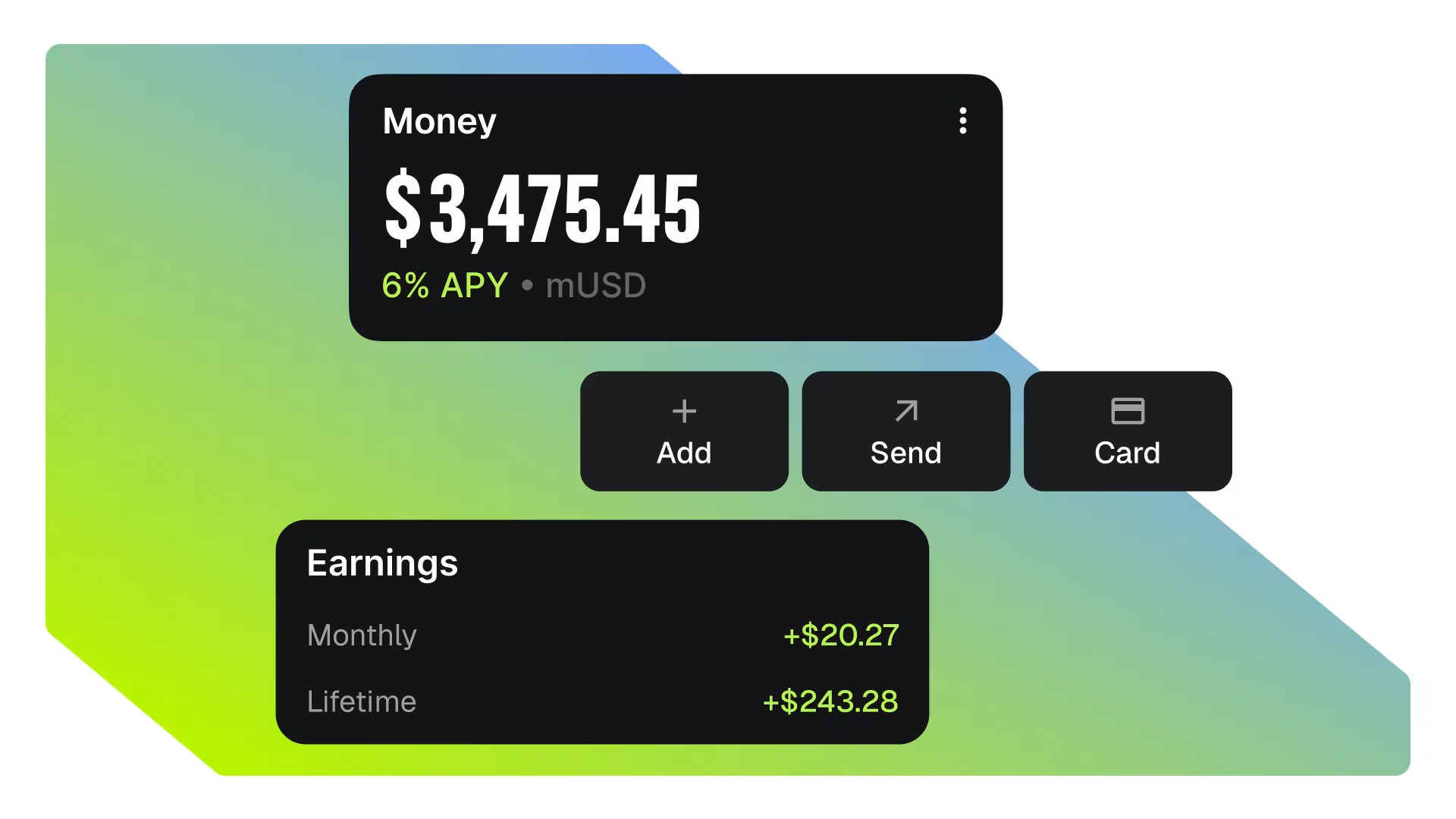
Introducing MetaMask Money Account
Earn up to 6% APY automatically as you trade, send, and spend. Turn your money on.

