
MetaMask, formerly Consensys Software Inc, is the world's largest self-custodial financial platform, giving people a single place to hold, spend, save and grow their money across both crypto and traditional assets. The company is building the consumer platform where that happens, bringing payments, savings, investing and digital assets together in one seamless experience. Having grown from the world's most widely used self-custodial wallet, MetaMask gives users direct control over their money and assets, with reach across approximately 190 countries. MetaMask has played a foundational role in Ethereum's growth since 2016. Today, MetaMask sits at the center of the blockchain economy, building the operating system for Open Money and putting people in full control of their financial lives.
Read all articles
The Lightning Network is a payment network built on top of Bitcoin. It lets people send bitcoin in seconds for low fees, by moving transactions off the main network. Two parties lock bitcoin into a shared payment channel, pay each other as many times as they like, and record only the final balance on Bitcoin when they close the channel.
Disclaimer: This guide is for educational purposes only. It is not financial advice, not a solicitation, and not for UK audiences. Bitcoin, the Lightning Network, and the services described here carry risk and are not suitable for all users.
Why Bitcoin needs a layer 2
Bitcoin is built for security and decentralization, not for fast, cheap small payments. Miners add a new block about every 10 minutes, and each block has limited space. That makes payments slow, and sometimes expensive for small, frequent transactions like buying a coffee. See how Bitcoin works for more on blocks and mining.
Lightning is a layer 2 network: a system that runs on top of Bitcoin and settles back to it. Joseph Poon and Thaddeus Dryja proposed it in a 2016 paper, and it launched in 2018. Bitcoin remains the final settlement layer, while Lightning carries everyday payments.
How Lightning payment channels work
A payment channel is an arrangement between two parties, backed by bitcoin locked on the main network:
Opening: The two parties send bitcoin to a 2-of-2 multisignature address, which means both of their signatures are needed to move the funds. Opening a channel takes one Bitcoin transaction and one network fee.
Paying: The two parties exchange signed updates that change how the locked balance is split. Each update is a valid Bitcoin transaction that either side could broadcast, but neither does. These updates are instant and don't touch the Bitcoin blockchain.
Closing: When they're done, the parties broadcast a closing transaction with the latest balance to Bitcoin. That’s the second channel transaction.
Many Lightning Network payments end up settled in just two transactions. If one party tries to cheat by broadcasting an old balance, the other party has a window to submit proof and claim the full channel balance as a penalty. So each user needs to check the blockchain periodically while a channel is open. Users who can’t do that can rely on a watchtower, which is a service that monitors the channel on their behalf.
How Lightning routing works
Opening a channel with every person you want to pay isn't practical. Lightning solves this with routing. A payment can hop through several connected channels to reach its destination.
Each hop is secured by a hashed timelock contract (HTLC), which ensures that either every hop in the route completes or none does. Intermediate nodes can't take the funds in the middle. Routing nodes charge a small fee for forwarding payments, usually a base fee plus a tiny percentage of the amount.
Every channel along the route needs enough liquidity, meaning bitcoin available in the right direction. Large payments can fail if no route has enough capacity, which is why Lightning works best for small and medium amounts.
Lightning Network vs Bitcoin network: how payments compare
The table compares a payment on the Lightning Network with a regular transaction on the Bitcoin network.
Feature | Bitcoin network (L1) | Lightning Network (L2) |
Time for transaction to settle | 10-60+ minutes | 1-2 seconds or less |
Cost | $0.30-$.60 (under normal conditions) | Less than $0.01 (under normal conditions) |
Is each payment public on the Bitcoin network? | Yes; Every transaction is public; Visible in any block explorer | No |
Can send large payments without route limits | Yes; No route or liquidity limits; Fee doesn't grow with the amount | Limited; Needs enough capacity along a route; Wallets can split larger amounts into multi-path payments |
Can receive while offline | Yes; Funds arrive at the Bitcoin address anytime; Spending needs the Private Key | Limited; Self-custodial Lightning wallets usually need to be online to receive funds; Custodial Lightning wallet providers receive payments on the user's behalf |
Needs an open channel? | No | Yes; Sender and receiver need a route of open channels; Many Lightning wallets open channels automatically |
Lightning Network fees
LN has 2 types of fees:
Network fees to open and close channels, paid at the current Bitcoin network fee rate.
Routing fees for each payment. Typically a fraction of a cent for small amounts. For example, on October 29, 2026, routing nodes charged a median base fee of ~0.16 satoshi, or sat, the smallest unit of bitcoin (0.00000001 BTC), plus ~0.014% of the amount per hop, according to the Lightning Network explorer 1ML.
For someone making many small payments, the opening and closing costs are spread across all of them. For a single large payment, there's nothing to spread those costs across, and a regular Bitcoin transaction avoids routing limits.
How big is the Lightning Network in 2026?
As of October 26, 2026, the public Lightning Network held ~3,430 BTC of capacity across ~35,600 channels and ~12,800 nodes. That's ~41% below the LN record of ~5,850 BTC set on December 28, 2025, a month when centralized exchanges such as Binance and OKX added bitcoin to their channels, according to Lightning analytics firm Amboss. Public trackers count channels differently, so their totals vary.
These figures cover only public channels. Private channels opened by Lightning wallets and payment services don't appear in public data, so total capacity is higher.
Capacity also doesn't measure payments. Bitcoin financial services company River's February 2026 report estimated that Lightning handled ~$1.17 billion across 5.22 million payments in November 2025, ~4 times the $286.5 million a year earlier. That estimate predates the 2026 drop in public capacity.
Node counts have fallen ~38% from a peak of ~20,770 in March 2022, according to Bitcoin Visuals, and liquidity is concentrated. Spark's capacity map shows the 10 largest Lightning nodes holding ~62% of public capacity.
Custodial vs self-custodial Lightning wallets: who manages the channels
Lightning Network wallets fall into two groups:
Custodial wallets hold the funds and manage channels for the user. They’re simple to use, but require trusting the provider, the same as keeping bitcoin on an exchange.
Self-custodial wallets keep the user in control of the funds. They handle channel management in the background, but users may need to keep the app online or rely on a watchtower to monitor for cheating.
Many exchanges support Lightning deposits and withdrawals, which lets users move bitcoin between platforms without paying a full network fee.
Lightning Network limits and trade-offs
Lightning trades some of Bitcoin’s simplicity for speed and low fees. The main limits are:
Liquidity. Receiving payments requires inbound capacity, meaning bitcoin on the channel partner’s side. New users may not have it.
Online requirements. Self-custodial users need to come online periodically or use a watchtower to protect against a partner broadcasting an old balance.
Payment size. Large payments can fail to find a route with enough capacity.
Centralization. A small number of large nodes route most payments.
Bitcoin dependence. Opening and closing channels still costs network fees, which rise when the mempool (Bitcoin’s queue of unconfirmed transactions) is busy.

- GUIDES

Champions League prediction markets explained
The 2026-2027 Champions League season trading map: an overview of key prediction markets across the league phase and knockouts, what makes pricing distinct, and what moves volume from the opening match on Sep 8 2026 to the final in Madrid on June 5 2027.
- LATEST
MetaMask Card x Blackbird: Dine like an insider
Restaurant lovers, your card unlocks priority access.
- LATEST
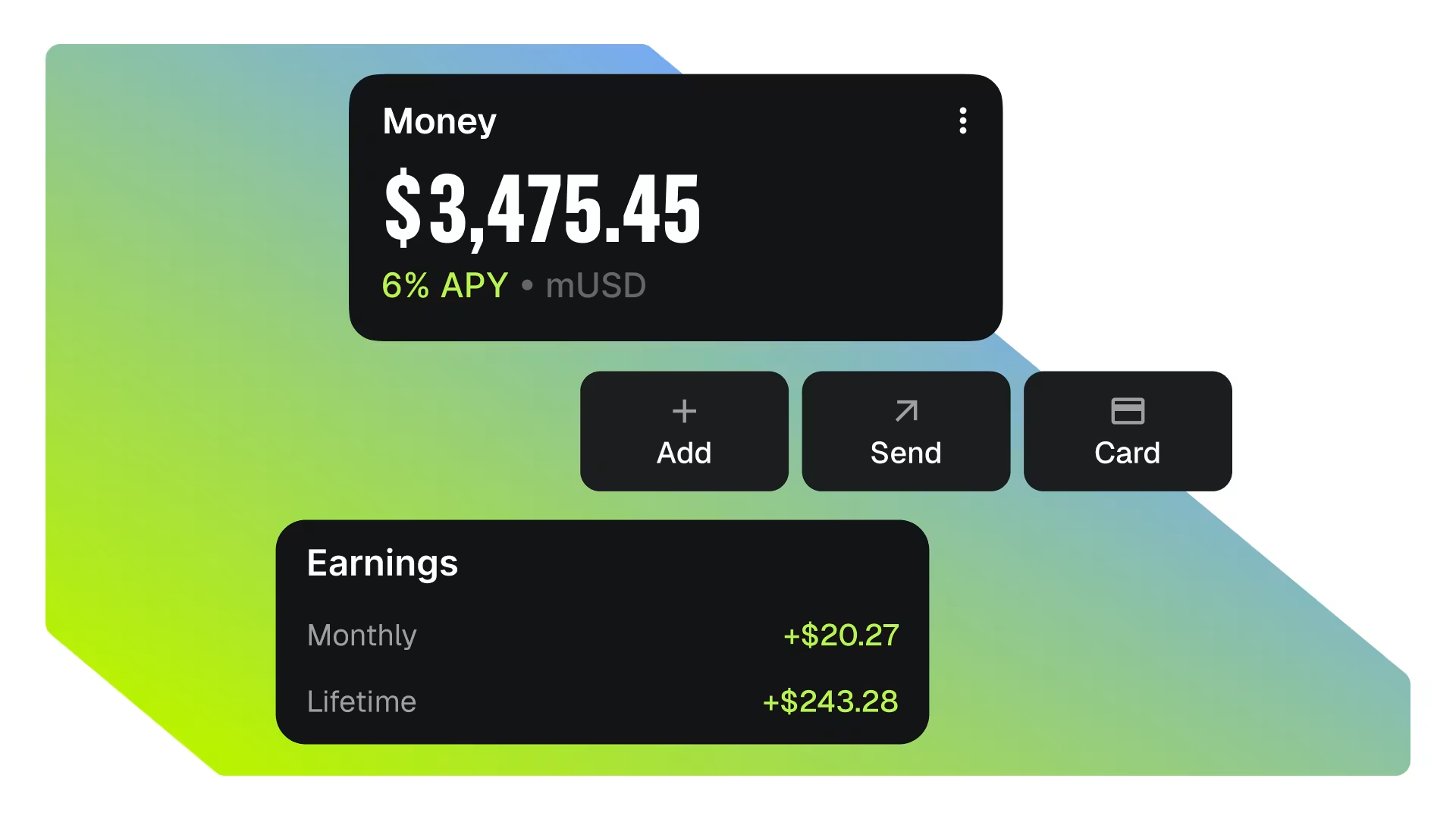
Introducing MetaMask Money Account
Earn up to 6% APY automatically as you trade, send, and spend. Turn your money on.
