
MetaMask, formerly Consensys Software Inc, is the world's largest self-custodial financial platform, giving people a single place to hold, spend, save and grow their money across both crypto and traditional assets. The company is building the consumer platform where that happens, bringing payments, savings, investing and digital assets together in one seamless experience. Having grown from the world's most widely used self-custodial wallet, MetaMask gives users direct control over their money and assets, with reach across approximately 190 countries. MetaMask has played a foundational role in Ethereum's growth since 2016. Today, MetaMask sits at the center of the blockchain economy, building the operating system for Open Money and putting people in full control of their financial lives.
Read all articles
Key takeaways about stablecoins for beginners
Stablecoins are a type of digital token designed to maintain a more steady value than cryptocurrencies like Bitcoin, which can have considerable price swings in short periods of time.
Many stablecoins are backed 1:1 with real assets, meaning that for every digital token in circulation, there's something like a US dollar or a euro in a bank account behind it.
People use stablecoins to send money abroad cheaply, trade between cryptocurrencies, and make everyday payments.
Stablecoins can have risks: the company behind them could fail, the price could slip, or bugs in the software could cause problems.
Governments are now writing rules about how stablecoins must work and who can issue them
What is a stablecoin?
A stablecoin is a type of digital currency that’s designed to always be worth the same amount—usually one dollar, one euro, or one pound. Stablecoins, aka stables, can be sent anywhere in the world in seconds, without going through a bank. Unlike cryptocurrencies such as Bitcoin, which can swing between $60,000 and $80,000 in a single week, stablecoins are built to hold a steady value by being backed with real-world assets like cash, government bonds, or other fiat currencies. “Fiat” just means government-issued money like US dollars or euros.
The price stability of stablecoins is the whole point. Big price swings of tokens like Bitcoin are what attract people to trade it, but they’re not as suitable for all purposes. Imagine sending a rent payment to your landlord that loses 20% of its value by the time it reaches their account. Stablecoins exist to give people the speed, low fees, and borderless access of crypto without the unpredictable price moves. This beginner's guide covers how stablecoins work, the main types, what to look out for, and common uses in 2026.
Disclaimer: This article is for educational purposes only. It is not financial advice, not a solicitation, and not for UK audiences. Stablecoins are risky and not suitable for all users.
How do crypto networks and wallets work? A short overview
Before getting into how stablecoins hold their value, two terms are worth defining.
A blockchain network is a shared record-keeping system that no single person or company controls. Instead of one bank keeping track of who owns what, thousands of computers around the world hold identical copies of the same record. When a stablecoin transfer happens, that transaction is recorded across all of them at the same time, which makes it very hard to tamper with or fake.
A digital crypto wallet is the app or software used to hold and send stablecoins. It works like a traditional bank account in some ways—you can see your balance and make transfers—but there's no bank involved. If it is a self-custodial wallet like MetaMask, the holder is in total control of their own funds. If it is a custodial wallet like Binance, a centralized exchange controls the holder’s funds.
Stablecoins live on and move across blockchain networks, commonly referred to as onchain. These networks enable fast, borderless transfers that are available 24 hours a day. Most stablecoin activity runs on three blockchains: Ethereum, TRON, and Solana. A traditional bank transfer might take days to go through and involve multiple middlemen charging fees along the way. A stablecoin transfer can go from sender to recipient in seconds, at a fraction of the cost.
How do stablecoins keep their value?
A dollar in a bank account is generally expected to stay worth a fixed amount, for example $1, because it is backed by traditional financial banking systems and deposit insurance. A stablecoin does something similar, but instead of a bank, it uses one of a few different methods. Each method is explained in the types section below, but the basic idea is the same: there's always something backing the token that gives it its underlying value.
The simplest version: a company holds $1 in a bank account for every stablecoin it creates. Buying 100 stablecoins means the company puts $100 in reserve. Returning the stablecoins means getting $100 back. The price stays at $1 because real dollars are always backing it.
If the price ever drifts, say the token starts trading at $0.98, traders can buy it cheap and cash it in for the full $1, making a small profit in the process. That activity naturally pushes the price back up. It works the other way too: if the price rises above $1, people sell, pushing it back down. The system mostly corrects itself.
This works as long as people trust that the backing is real. In March 2023, USDC briefly dropped to $0.87 after its issuer, Circle, revealed that $3.3 billion of its reserves were stuck at Silicon Valley Bank, which had just collapsed. The price recovered once federal regulators guaranteed the bank's deposits, but the episode showed how quickly confidence can affect a stablecoin, even one that was properly backed.
Types of stablecoins
There are four main types of stablecoins, each using a different method to keep its price stable.
Type | How it's backed | Example | Common use case |
Fiat-backed | Cash or government bonds held by the issuer | USDT (Tether), USDC (Circle), mUSD (MetaMask) | Payments, trading, and transfers where a reliable price matters most |
Crypto-backed | Backed by more crypto than the stablecoin is worth, locked in an automated program | DAI | Users who want a stablecoin that doesn't depend on a single company |
Commodity-backed | Physical assets like gold held in reserve | PAXG (Paxos Gold) | Holding gold digitally without needing to store it physically |
Algorithmic | Software rules that adjust supply, with no direct reserves | TerraUSD (collapsed May 2022) | Experimental; no large-scale success to date |
Backed by real currency (fiat-backed)
Fiat-backed stablecoins are the most common type. A company holds real money—like cash or government bonds—in reserve, matching every stablecoin in circulation. Holding 100 of these stablecoins means there should be $100 sitting in a bank or equivalent somewhere backing it.
Examples: mUSD (MetaMask's dollar-backed stablecoin issued by Bridge), USDC (issued by Circle), and USDT (issued by Tether).
This type is simple and widely trusted, but it depends on a single company; holders are relying on that company to manage the reserves honestly and keep them accessible.
Backed by other cryptocurrency (crypto-backed)
Instead of cash in a bank, crypto-backed stablecoins use other digital currencies as backing. These are held in a smart contract—a program that runs automatically on a blockchain, following a fixed set of rules without anyone controlling it. Because digital currencies can drop in value suddenly, the system requires more backing than the stablecoin is worth. To create $100 worth of stablecoins, $150 or more of another cryptocurrency might need to be deposited. If that backing falls too far in value, the program automatically sells some to cover the gap.
Example: DAI.
This type doesn't rely on any company, but it's more complex and less efficient. More money needs to be locked up than the stablecoins are worth.
Backed by physical assets (commodity-backed)
Some stablecoins are backed by real-world physical goods like gold. Each token represents a specific amount of that asset held in storage. This lets someone hold the value of gold, for example, as a digital token without needing to physically store it.
Example: PAXG, where each token is backed by one troy ounce of gold held in a vault.
Backed by code (algorithmic)
Algorithmic stablecoins try to hold their price using software rules alone—automatically creating more coins when the price rises above $1 and removing coins when it falls below. There is no cash, gold, or cryptocurrency behind them; they’re backed by code.
In theory this sounds like it could work. In practice it has not. The most well-known example, TerraUSD (UST), collapsed in May 2022, losing its value almost entirely within days and wiping out approximately $40 billion, according to Chainalysis's breakdown of the Terra/Luna collapse. This approach is now widely considered too risky to rely on.
What are stablecoins used for?
Stablecoins started as a tool for crypto traders, but they've grown far beyond that. In 2025, stablecoins moved approximately $33 trillion in total value according to Bloomberg—more than the combined yearly total of Visa and Mastercard, which together handled roughly $25.5 trillion. Here are the most common ways people use them today.
Sending money abroad
Sending money internationally through a bank is slow and expensive. According to the World Bank's Remittance Prices database, the global average cost of sending money internationally in Q1 2025 was 6.36% of the amount sent, and costs to some regions like sub-Saharan Africa averaged as much as 8.78%. Stablecoin transfers can cost a fraction of a cent and arrive in seconds, without any bank in the middle. Lower fees are a key reason why stablecoin adoption is growing fast in regions like Latin America and Southeast Asia, where sending money across borders is common and traditional banking is expensive.
Trading between different cryptocurrencies
When someone wants to move out of a more volatile token without converting back to regular money, which can be slow and involve fees, moving into a stablecoin is a common alternative. The value of stables is designed to stay steady, though they carry their own risks as described below.
Earning returns via lending on blockchain networks
Stablecoins can be deposited into lending programs that run on blockchains, where other users borrow them and pay interest. This works similarly to a savings account in concept, but runs on software rather than through a bank. Some wallets build this directly. These programs may carry risks, the software could have flaws, or borrowers could fail to repay, meaning depositors could lose some or all of their funds.
Everyday payments
Some wallets now include cards that convert stablecoins to local currency at the moment you pay online or IRL. MetaMask Card, for example, works anywhere Mastercard is accepted, at over 150 million merchants worldwide.
What can go wrong with stablecoins?
Stablecoins are designed to have a steady value, but that doesn't mean they're always safe. Below are four common risks.
The price can slip
Even well-designed stablecoins can drift from their target value, especially during periods when many people try to sell or withdraw at the same time. Usually this is temporary, but in severe cases it can become permanent. The TerraUSD collapse is the clearest example: the price broke down and did not recover its dollar value.
The company behind it can fail or mislead
Stablecoins backed by cash or assets depend on the issuer actually holding what they claim. If reserves are poorly managed, overstated, or tied up in assets that can't be quickly accessed, holders may not be able to get their money back.
The software can have bugs
Stablecoins that use automated programs to manage their backing, like crypto-backed stablecoins, depend on that software working correctly. If there's a flaw in the code, funds could be lost or the system could behave in ways nobody intended.
The rules are still being written
Governments including the US and the European Union have started writing rules for how stablecoins must work, including how reserves are held and who can issue them, but the rules vary by country and are still developing.
Stablecoins and the bigger picture in 2026
Stablecoins are an early example of a broader idea called tokenization—turning something that exists in the real world into a digital version that can move on a blockchain. A dollar-backed stablecoin is essentially a digital dollar. The same idea can apply to gold, government bonds, property, or company shares.
This matters because the same technology behind stablecoins is now being used by major banks and investment firms to create digital versions of traditional financial products. For more on this trend, explore a guide to understanding tokenized real-world assets.

- GUIDES

Champions League prediction markets explained
The 2026-2027 Champions League season trading map: an overview of key prediction markets across the league phase and knockouts, what makes pricing distinct, and what moves volume from the opening match on Sep 8 2026 to the final in Madrid on June 5 2027.
- LATEST

MetaMask Card x Blackbird: Dine like an insider
Restaurant lovers, your card unlocks priority access.
- LATEST
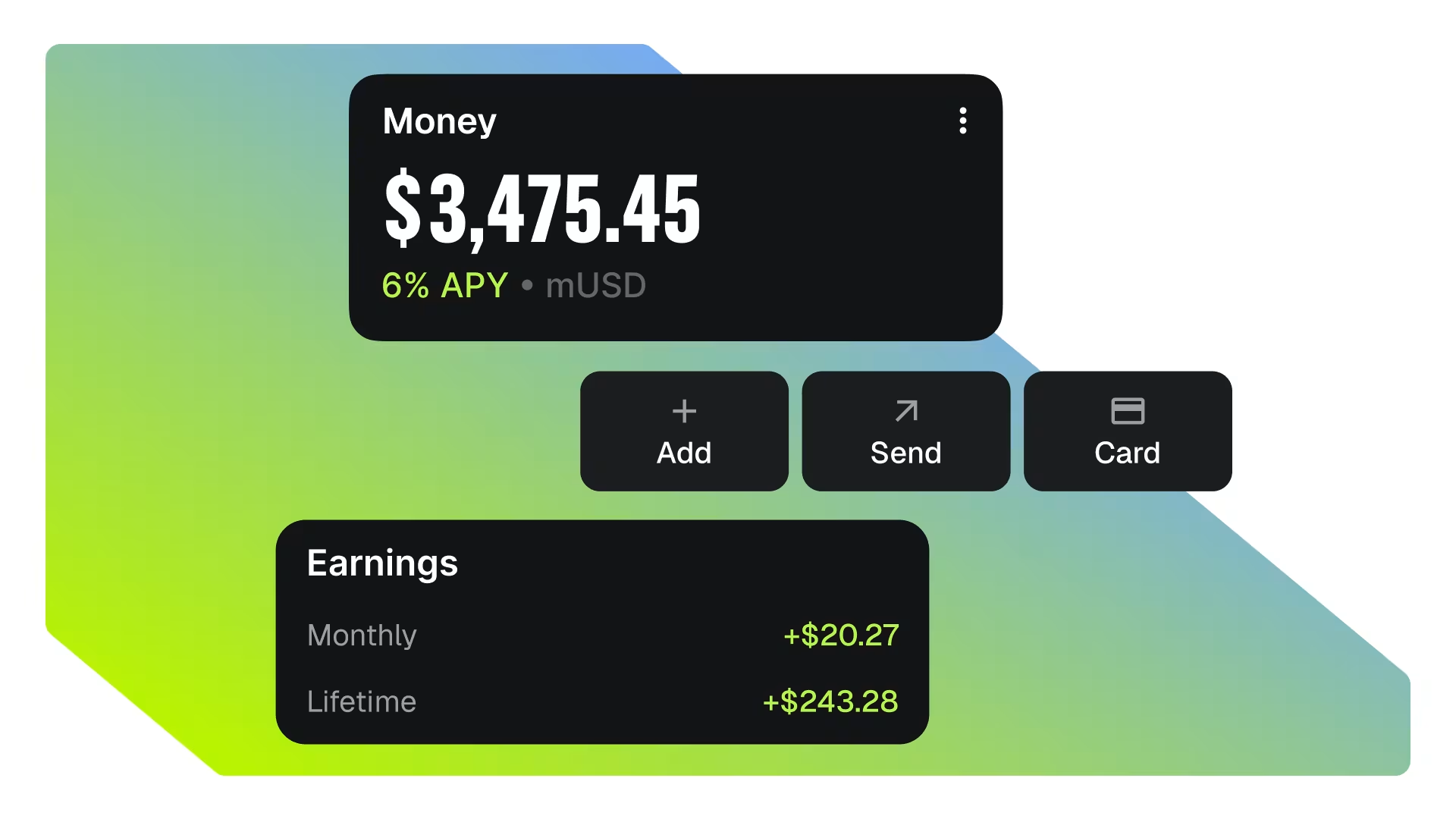
Introducing MetaMask Money Account
Earn up to 6% APY automatically as you trade, send, and spend. Turn your money on.

