
MetaMask, formerly Consensys Software Inc, is the world's largest self-custodial financial platform, giving people a single place to hold, spend, save and grow their money across both crypto and traditional assets. The company is building the consumer platform where that happens, bringing payments, savings, investing and digital assets together in one seamless experience. Having grown from the world's most widely used self-custodial wallet, MetaMask gives users direct control over their money and assets, with reach across approximately 190 countries. MetaMask has played a foundational role in Ethereum's growth since 2016. Today, MetaMask sits at the center of the blockchain economy, building the operating system for Open Money and putting people in full control of their financial lives.
Read all articles
Bitcoin transaction fees are payments to miners for including a transaction in a block. The fee depends on how much block space the transaction takes up, measured in virtual bytes (vB), and on how much demand there is for that space at the moment. The amount of bitcoin sent doesn't change it.
Disclaimer: This guide is for educational purposes only. It is not financial advice, not a solicitation, and not for UK audiences. Bitcoin and the networks described here carry risk and are not suitable for all users.
How Bitcoin transaction fees are calculated
Every Bitcoin block has limited space, about 4 million weight units, which works out to roughly 1 million virtual bytes. Miners choose which pending transactions to include, and they usually pick the ones paying the most per byte, since that earns them the most from the space they have.
That's why Bitcoin fees are quoted as a rate: satoshis per virtual byte, or sat/vB. A satoshi is the smallest unit of bitcoin, one hundred-millionth of a BTC. The total fee is the rate multiplied by the transaction's size:
Fee = fee rate (sat/vB) × transaction size (vB)
As an example, a typical single-input payment of about 140 vB sent at 1 sat/vB costs 140 satoshis. At a bitcoin price of about $82,800 (October 22, 2026), that's roughly $0.12
Every Bitcoin block has limited space, about 4 million weight units, the measure Bitcoin uses for block size, which works out to roughly 1 million virtual bytes. Miners choose which pending transactions to include, and they usually pick the ones with the highest fee per virtual byte, since that earns them the most from the space they have.
That's why Bitcoin wallets and mempool trackers quote Bitcoin fees as a rate: satoshis per virtual byte, or sat/vB. A satoshi is the smallest unit of bitcoin, one hundred-millionth of a BTC. The total fee is the rate multiplied by the transaction's size:
Fee = fee rate (sat/vB) × transaction size (vB)
What makes a Bitcoin transaction larger
A transaction's size mostly comes from its inputs and outputs:
Inputs are the earlier payments (unspent transaction outputs, or UTXOs) being spent. Each one adds size, so spending many small UTXOs together costs more than spending one large one.
Outputs are the destinations, usually the recipient plus a change output that sends the leftover amount back to the sender's wallet.
Address type changes how much data each input takes. Older formats need more data per input.
Address type | Starts with | Typical input size | Fee effect |
Legacy (P2PKH) | 1 | 148 vB | Highest fees |
Wrapped SegWit (P2SH-P2WPKH) | 3 | 91 vB | Moderate savings |
Native SegWit (P2WPKH) | bc1q | 68 vB | Lower fees |
Taproot (P2TR) | bc1p | 57.5 vB | Lowest per input; outputs are slightly larger, so savings over native SegWit are small |
Input sizes: Bitcoin Optech transaction size calculator.
SegWit, activated in 2017, moved signature data into a separate part of the transaction that counts for less weight. Taproot, activated in 2021, made inputs signed with one key slightly smaller again and lets many complex spending conditions look like ordinary payments when spent.
How the mempool sets Bitcoin fees
After a wallet broadcasts a transaction, the transaction waits in the mempool, the pool of unconfirmed transactions each node, a computer running Bitcoin software, holds. Miners pick from the mempool by fee rate. When the mempool is full, the minimum rate needed to get into the next block goes up. When it empties, the rate falls back toward the minimum.
Fees in 2026 have mostly sat at the low end. On October 30, 2026, mempool.space suggested 1 to 4 sat/vB, depending on how fast the sender wants confirmation, and the mempool held about 55,300 unconfirmed transactions. Miners were also including transactions with fee rates as low as 0.1 to 0.2 sat/vB, since Bitcoin Core 30.0 lowered the default minimum relay rate, the lowest rate nodes pass along to each other, to 0.1 sat/vB in October 2025. Over the previous 144 blocks, about one day, fees made up about 0.6% of miner revenue, with the rest coming from the block subsidy, the new bitcoin miners receive for each block.
Fees can still spike. During busy periods, such as token launches or sharp market moves, rates for the fastest confirmation have reached hundreds of sat/vB. Around the April 20, 2024 halving, when the block subsidy dropped by half and the Runes token protocol launched, rates passed 1,000 sat/vB. The mempool tends to clear during quieter hours, often late at night and on weekends in US and European time zones.
How Bitcoin wallets estimate fees
Wallets estimate fees by looking at the current mempool and recent blocks, then suggesting a rate for a target confirmation time. Some also let the sender enter a custom rate in sat/vB. Many show a few choices:
Fast: aims for the next block, roughly 10 minutes.
Standard: aims for confirmation within about an hour.
Slow or economy: a lower rate that may take hours when the network is busy.
Fee estimates reflect conditions at the moment of sending. If demand rises after the wallet sends a transaction, a transaction with a low fee can wait longer than expected. When the mempool fills up, nodes drop the transactions with the lowest fees from their pools to stay under their memory limit, and the sender's wallet can then rebroadcast the transaction or replace it.
How to speed up a stuck Bitcoin transaction
Replace-by-fee (RBF): the sender broadcasts a new version of the same transaction with a higher fee. Miners include the new version to collect the higher fee.
Child-pays-for-parent (CPFP): the recipient, or the sender through the change output, spends the unconfirmed output in a new transaction with a fee high enough to cover both. Miners include both to collect the combined fee.
Availability depends on the sender or recipient's wallets.
How to lower Bitcoin fees
Use a newer Bitcoin address type: native SegWit and Taproot addresses cost less to spend from than legacy addresses. MetaMask creates native SegWit addresses for Bitcoin by default.
Send when the network is quiet: checking a mempool tracker, a site such as mempool.space that shows pending transactions and current rates, before a send that isn't urgent can show whether rates are near the minimum.
Choose a slower confirmation target: when timing doesn't matter, an economy rate costs less than a fast one.
Consolidate small UTXOs when fees are low: combining many small inputs into one when fees are around 1 sat/vB means fewer inputs to pay for later, when fees may be higher.
Batch payments: sending to several recipients in one transaction shares the fixed overhead, the base data every transaction carries, across all of them.
Use the Lightning Network for small, frequent payments: lightning moves payments into payment channels off Bitcoin's main chain, and only opening and closing a channel needs an onchain transaction, so individual payments cost a fraction of an onchain fee.
How Bitcoin fees compare to Ethereum fees
On both Bitcoin and Ethereum networks, users pay for block space, but fees are calculated differently. On Bitcoin, the fee depends on transaction size in virtual bytes, and the full fee goes to the miner. On Ethereum, the fee depends on computation, measured in gas aka network fees. Part of each network fee is burned under EIP-1559, and the rest goes to the validator that proposes the block. For more about the process, see Ethereum gas fees explained.

- GUIDES
Top RWA tokenization platforms
Explore the leading tokenized real-world asset (RWA) platforms by category: treasuries, private credit, gold, equities, and real estate.
- GUIDES
How do stablecoins work? A complete guide for traders
Learn about stablecoins: how they're backed, peg mechanics, collateralization, redemption, yield, and regulations.
- LATEST
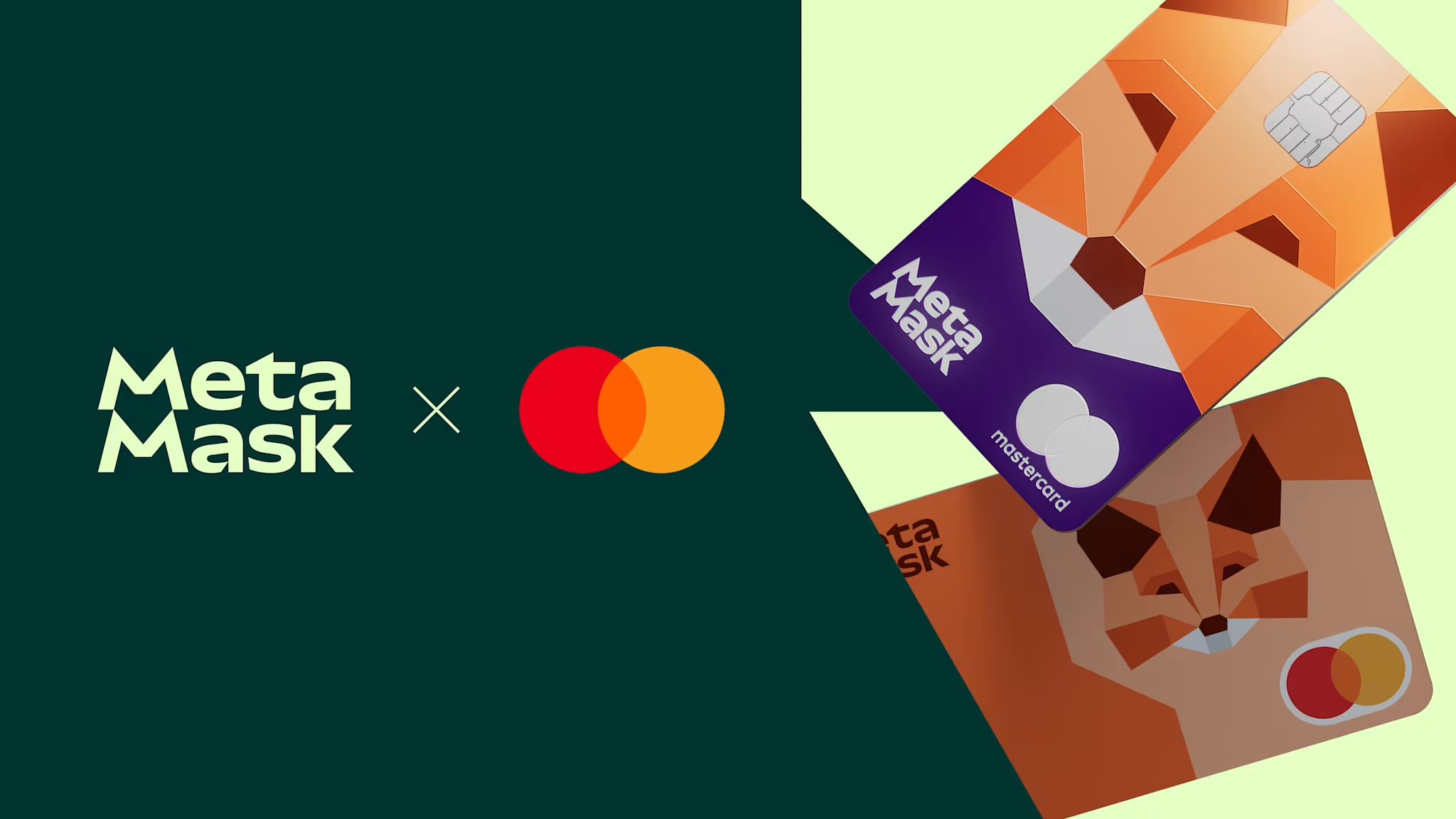
MetaMask and Mastercard partner to launch the US MetaMask Card, with first-time availability in New York
Now available nationwide, including New York for the first time, MetaMask Card introduces a premium Metal tier, mUSD cashback, and seamless spending at 150M+ Mastercard merchants worldwide.
