
MetaMask, formerly Consensys Software Inc, is the world's largest self-custodial financial platform, giving people a single place to hold, spend, save and grow their money across both crypto and traditional assets. The company is building the consumer platform where that happens, bringing payments, savings, investing and digital assets together in one seamless experience. Having grown from the world's most widely used self-custodial wallet, MetaMask gives users direct control over their money and assets, with reach across approximately 190 countries. MetaMask has played a foundational role in Ethereum's growth since 2016. Today, MetaMask sits at the center of the blockchain economy, building the operating system for Open Money and putting people in full control of their financial lives.
Read all articles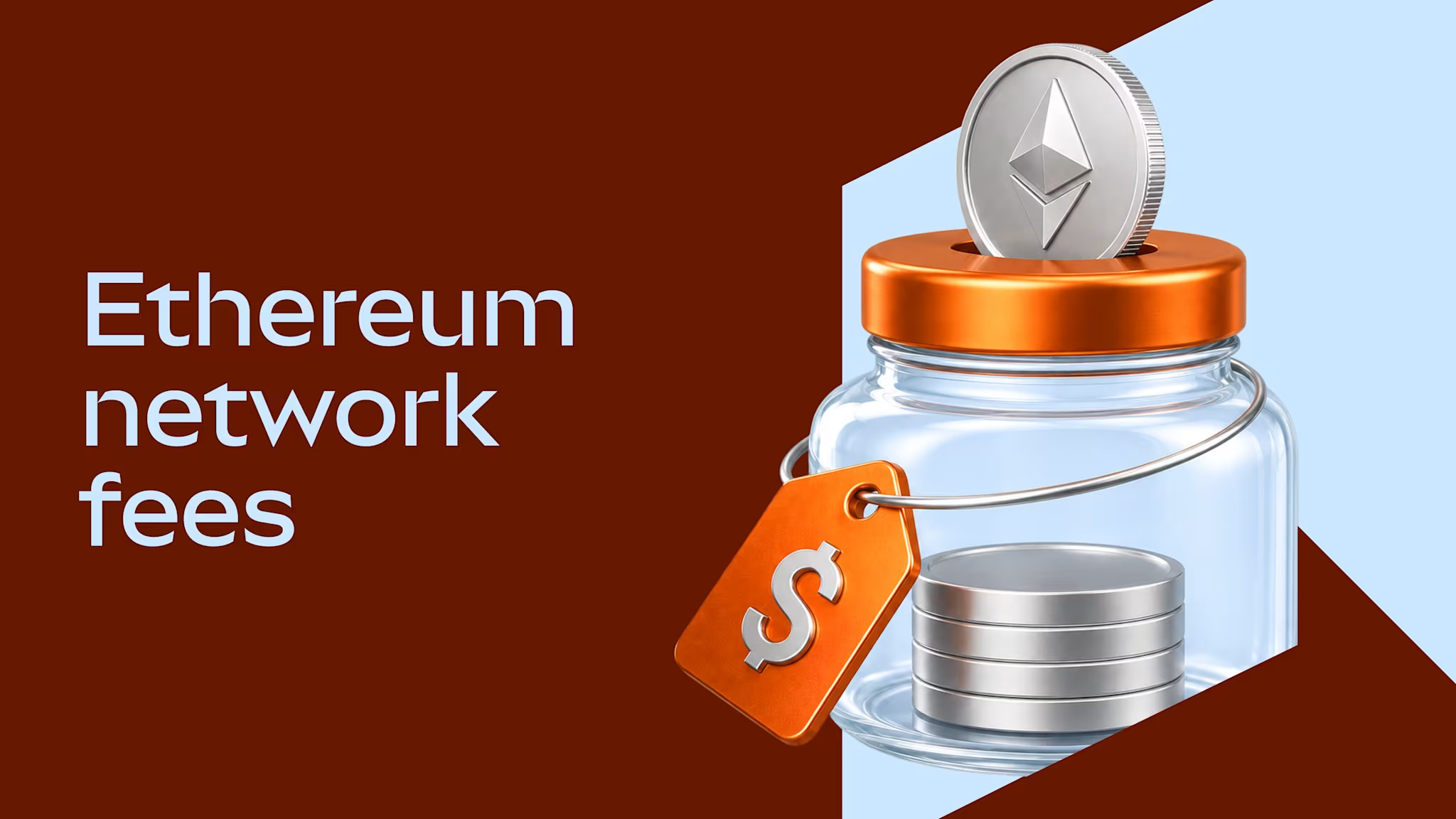
Ethereum network fees, AKA gas fees, are the payments users make to have transactions processed and recorded on the blockchain. Each fee is measured in gas, the unit of computational work, and priced in gwei, a denomination of ether equal to one-billionth of an ETH. Under the EIP-1559 fee model, each fee is made up of a base fee set by the Ethereum network, plus an optional priority fee (a tip) that goes to the validator that processes the transaction. Disclaimer: This content is for educational purposes only. It is not financial advice, not a solicitation, and not for UK audiences.
What does the Ethereum gas fee pay for?
Every action on Ethereum that changes the state of the blockchain—sending ETH, swapping tokens, minting an NFT, interacting with a smart contract—requires computation that thousands of independent nodes must execute and store. Gas is the unit that measures how much computational work an action takes. A gas fee is the price paid for that gas.
The total Ethereum gas fee due is calculated by:
Gas amount. How much computation the action takes. A basic ether transfer is fixed at 21,000 gas, while a multi-step DeFi trade can use hundreds of thousands. The exact amount is a property of the action itself.
Gas price. What you pay per unit of gas, quoted in gwei. This is set by the market and swings from minute to minute.
Multiply the two and you have your fee.One gwei is one-billionth of an ETH, or 0.000000001. Gas prices are quoted in that unit rather than in ether because the figures are otherwise too small to read at a glance.
Action | Gas amount | × Gas price | = Fee |
ETH transfer | 21,000 | 20 gwei | 420,000 gwei (0.00042 ETH) |
Token swap | ~200,000 | 20 gwei | 4,000,000 gwei (0.004 ETH) |
Both rows pay the same 20 gwei. The transfer still costs ten times less. The only thing that differs is how many units each action burns. Gwei tells you the price of one unit, never the size of the bill.
How EIP-1559 changed Ethereum's fee model
From July 2015 to August 2021, Ethereum used a simple auction: everyone submitting a transaction named a single gas price, validators picked the highest bids, and users had to guess how much to offer. Bid too low and the transaction stalled, bid too high and money was wasted. Ethereum’s August 2021 London upgrade introduced EIP-1559, replacing guesswork with a 2-part structure of a base fee and a priority fee.
The Ethereum network base fee
The base fee is a price per unit of gas that the network itself sets for every block, rather than something users bid on. It adjusts automatically based on how full recent blocks have been. Ethereum targets blocks that are half full, a target of ~30 million gas against a ~60 million gas limit as of August 2026, and the base fee moves toward keeping them there. When a block comes in above the target, the base fee for the next block rises, and when it comes in below target, the base fee falls. The rate of change is capped, so the base fee can move at most 12.5% from one block to the next, which keeps prices from spiking without warning while still letting them climb steadily under sustained demand.
The defining feature of the base fee is that it's burned, permanently removed from circulation rather than paid to the validator. Burning the base fee removes a validator's incentive to artificially inflate it, since they don't collect it. It also ties ETH supply to network usage, so when the network is busy, more ETH is burned. Since EIP-1559 went live, more than 4 million ETH have been burned this way, though the pace has slowed as activity shifted to layer 2 networks like Arbitrum and Base. Ethereum's base layer still benefits, since those networks pay to post their data back to it, but those fees are small, which is part of why the burn slowed.
The Ethereum network priority fee
The priority fee, or tip, is the optional amount added on top of the base fee that goes directly to the validator as an incentive to include a transaction. Because the base fee is fixed by the network for a given block, the tip is the lever that actually competes for space. When the network is quiet, a small tip is enough. When many people want their transactions confirmed quickly, tips rise as users bid against each other for a spot in the next block.
In practice, a wallet expresses these two parts through two settings. The maximum fee per gas (maxFeePerGas) is the most a user is willing to pay in total per unit of gas, and the maximum priority fee per gas is the most they'll tip. The actual charge is the current base fee plus the tip, and the difference between that and the max fee is refunded automatically by the network, not by any exchange or app, so a user can set a high max to guarantee inclusion without paying it in full.
Why do Ethereum fees rise?
Because Ethereum’s base fee corresponds with how full recent blocks are, gas fees are tied to how much demand there is for a fixed supply of block space. Ethereum's base layer can only process a finite amount of gas per block. That ceiling is raised only gradually, by validator vote, so it can't expand on demand to absorb a sudden surge. When demand climbs, whether from a token launch, a rise or fall in the markets, a wave of liquidations, a sought-after NFT mint, or otherwise, blocks fill past target, the base fee ratchets up block after block, and users add larger tips to compete for what's left.
The same action on the Ethereum network can cost different amounts at different times. A token swap might cost a couple of dollars on a quiet weekend and far more during a market-wide scramble, even though the computation, the gas amount, is identical. What has changed is the gas price, which is driven by the volume of users trying to transact at a similar time. The extremes can be dramatic. However, spikes are far smaller than they used to be. When the WLFI token launched on September 1, 2025, gas jumped about 12x, from roughly 0.20 to 2.54 gwei, still only a fraction of a cent per transfer, a sign of how much cheaper the base layer became after Dencun.
If a transaction can wait, timing may help reduce costs. For example, Etherscan's Gas Tracker shows the live base fee and priority-fee tiers, and its gas-price history shows a recurring pattern: fees are usually lowest on weekends and during off-peak hours, roughly late-night UTC, and highest during US and European daytime. Checking an Ethereum gas tracker before a non-urgent transaction can be the difference between a few gwei and several times that.
How do crypto wallets estimate gas fees?
Because EIP-1559 makes the base fee predictable, wallets can estimate gas fees by reading the current base fee and recent tip levels directly from the network, then suggesting settings rather than asking users to guess a single price. For example, MetaMask typically presents this as a set of options, commonly a lower-cost "Low," default "Market," and faster "Aggressive" tiers that trade speed against cost, along with an "Advanced" view for setting the max fee and priority fee manually.
A gas fee estimate is a probability, not a promise. The gas limit, the maximum units of gas a transaction is allowed to consume, is separate from the price, and a limit set too low can cause a transaction to fail while still consuming the gas it used before running out. When a transaction is stuck, it can sometimes be replaced or sped up by resubmitting it with the same transaction sequence number and a higher tip. MetaMask solves this directly through its "speed up" and "cancel" options.
How does an Ethereum layer 2 network lower fees?
A commonly used lever for reducing Ethereum gas fees is to move activity off the base Ethereum layer (the layer 1 aka L1), onto a layer 2 (L2) network, rather than tweaking gas settings. L2s such as Arbitrum, Base, Optimism, and Linea process transactions on their own blockchains and then post compressed data or cryptographic proofs back to Ethereum, inheriting its security while typically charging a fraction of the fees.
L2 network fees typically break down into two costs:
Execution. Executing a transaction on an L2 is typically cheaper, because the L2 has more room in its own blocks than Ethereum's base layer does. The base layer shares one limited pool of block space among every app and user on Ethereum, so transactions bid against each other for it. An L2 handles execution on its own blockchain, generally with higher capacity, so each transaction claims a much smaller slice of a much larger space.
Data settlement. An L2 also has to pay to post its data back to Ethereum, and historically that was the larger cost. Ethereum's March 2024 Dencun upgrade introduced "blobs" through EIP-4844, a dedicated, lower-cost data channel sized specifically for rollup data, which sharply reduced the price L2s pay to settle back to the base layer and, in turn, the fees they charge users, in many cases by around 90% in the weeks after the upgrade.
- LATEST
Introducing MetaMask Transaction Shield
Get Transaction Protection and priority support for added peace of mind.
- LATEST
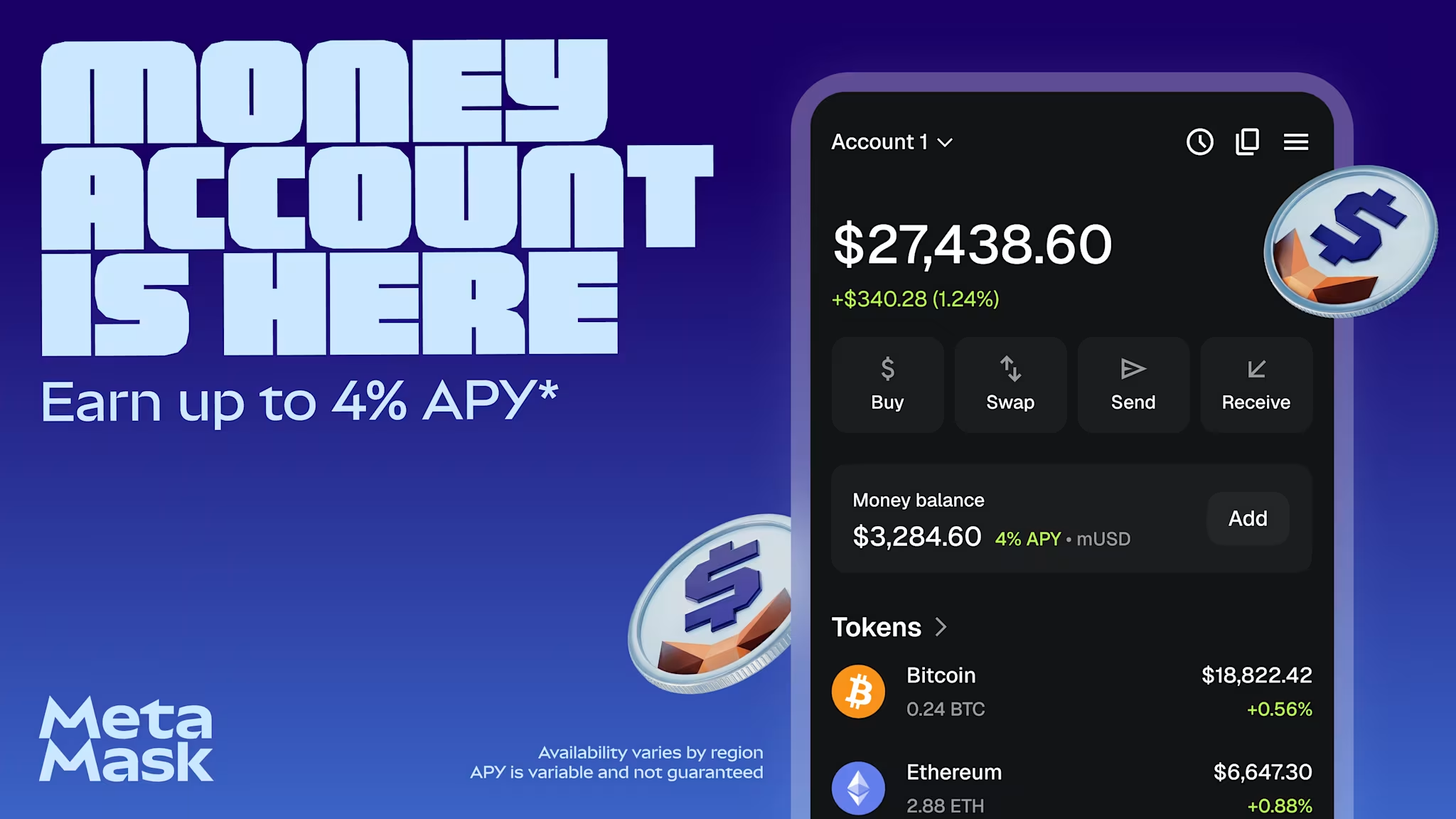
MetaMask launches Money Account, bringing DeFi yield and global spending to stablecoin balances
For the first time, users can earn up to 6% variable APY* on stablecoin balances and spend at hundreds of millions of merchants from a single self-custodial account, built on Monad.
- GUIDES

Top mobile crypto wallet apps in 2026
Compare the leading mobile crypto wallet apps across iOS and Android.
