
MetaMask, formerly Consensys Software Inc, is the world's largest self-custodial financial platform, giving people a single place to hold, spend, save and grow their money across both crypto and traditional assets. The company is building the consumer platform where that happens, bringing payments, savings, investing and digital assets together in one seamless experience. Having grown from the world's most widely used self-custodial wallet, MetaMask gives users direct control over their money and assets, with reach across approximately 190 countries. MetaMask has played a foundational role in Ethereum's growth since 2016. Today, MetaMask sits at the center of the blockchain economy, building the operating system for Open Money and putting people in full control of their financial lives.
Read all articles
F1 prediction markets are event contracts tied to Formula 1 outcomes, such as Grand Prix winners, podium finishes, pole position, and the Drivers' and Constructors' Championships. Each contract is priced between $0 and $1, and the price reflects the market's implied probability of the outcome. A correct contract settles at $1 and an incorrect one settles at $0.
In Formula 1, the fastest driver doesn't always win, and the best driver doesn't always have the fastest car. F1 markets have to price both, across 3 days of track sessions every race weekend. This guide covers how F1 markets are structured, how a race weekend impacts results, why 2026 regulation overhaul matters for pricing, and how the rest of the 2026 season and the 2027 calendar drive volume.
Disclaimer: This content is for educational purposes only. It is not financial advice, not a solicitation, and not for UK audiences. Prediction markets are risky and not suitable for all users.
F1 market types: races, qualifying, and championships
Race winner: which driver wins a Grand Prix. The headline weekend market opens weeks before the race and settles on the official classification from the Fédération Internationale de l’Automobile (FIA), Formula 1’s governing body.
Podium markets: whether a driver finishes in the top 3 of a Grand Prix, as listed in the FIA's Final Classification.
Pole position: which driver sets the fastest time in Grand Prix qualifying. On Polymarket, pole markets settle on the official qualifying result, even if a grid penalty later moves that driver back.
Sprint winner: which driver wins the Saturday Sprint race on Sprint weekends. On Polymarket, the Sprint winner market resolves to "Other" if the Sprint doesn't take place.
Head-to-head: which of 2 drivers, usually teammates in identical cars, finishes ahead in a Grand Prix, based on the FIA's Final Classification.
Drivers' Championship: a season-long market, known as an outright, on which driver finishes first in the season's final ‘Drivers' Championship’ standings, decided by total points scored across every Grand Prix and Sprint of the season.
Constructors' Championship: the season-long outright on which team finishes first in the season's final Constructors' Championship standings, which combine the points scored by both of its drivers.
F1 market type | What it settles on | When it resolves |
Race winner | Winner of a Grand Prix; listed first in the FIA's Final Classification | Race day, once the Final Classification is published, typically 30–60 minutes after the race |
Podium | Driver in the top 3 of the FIA's Final Classification | Race day, once the Final Classification is published |
Pole position | Fastest driver in Grand Prix qualifying | Qualifying day |
Sprint winner | Winner of the Sprint race | Sprint day, Saturday |
Head-to-head | Which of two drivers finishes ahead in the Grand Prix | Race day, once the Final Classification is published |
Drivers' Championship | Season points leader among drivers | After the final race on Polymarket, where eliminated drivers resolved "No" earlier |
Constructors' Championship | Season points leader among teams | After the final race on Polymarket, where eliminated teams resolve "No" earlier, or at the clinch on Kalshi |
For how contracts are priced, traded before settlement, and resolved, see how prediction market pricing works.
Why the F1 car impacts results
An F1 driver's results are capped by their car. In most sports, a matchup is between 2 teams or between 2 athletes. In F1, a driver's chances depend heavily on the car their team builds, so race winner markets usually concentrate on a small number of teams at the front of the grid. That's why head-to-head markets usually pair teammates, since identical machinery isolates driver performance.
Car performance changes over a season as teams bring upgrades. New aerodynamic and mechanical parts arrive throughout the year, so a team that starts slowly can climb the order by midseason. Championship outrights tend to reprice when an upgrade package visibly changes a car's pace.
Different track types favor different cars. Street circuits with few overtaking chances, such as Monaco and Singapore, reward qualifying position. Fast tracks with long straights reward low-drag efficiency. Some cars are stronger on one type than another, so the same driver's race winner price can vary widely from one weekend to the next.
Races have built-in volatility. Rain, tire strategy, mechanical failures, collisions on the first lap, and safety cars, which neutralize the field after an incident, can upend a race that looked settled. A driver who is a clear favorite on the grid can lose much of their contract value in a single lap.
Results can change after the checkered flag. Stewards, the officials who rule on incidents, can apply time penalties after a race, and cars can be disqualified for technical infringements found in inspection after the race, as happened to Lewis Hamilton, Charles Leclerc, and Pierre Gasly at the 2025 Chinese Grand Prix. Contract terms specify which official classification a market settles on and when. Polymarket's race markets, for example, use the FIA's Final Classification, typically published 30–60 minutes after the race.
In MetaMask Predictions, market creation and resolution are managed by Polymarket, which settles each market through an oracle, a service that reports the verified outcome to the market's smart contract, and allows disputes if a result appears incorrect.
Championships are decided by points, not wins. Championship markets track cumulative points across the season, not race wins alone. A consistent driver who finishes on the podium every weekend can lead a driver with more wins and more retirements. Late in the season, title contracts reflect the points math of how many races remain and how many points are still available.
Prices are spread across many outcomes. A race winner contract at $0.35 implies about a 35% chance that the driver wins. Probability is spread across far more outcomes than in a 2-sided matchup with 22 drivers on the grid, so a driver at $0.35 can still be a clear favorite. For terminology, see prediction markets concepts and terminology.
How the 2026 F1 regulations impact prediction market pricing
2026 brought a full rules overhaul covering power units, aerodynamics, and car size, which reset the competitive order and made pricing early in the season less certain than usual. Through the first 19 rounds, Mercedes drivers won 12 Grands Prix, according to Formula 1's 2026 race results, as of November 2026. According to Formula 1's own beginner's guide to the 2026 regulations and power unit explainer:
Power units, the hybrid engines that drive each car, now target about 50% of their output from electrical energy, up from about 20%, and all teams use Advanced Sustainable Fuels
Active aerodynamics let front and rear wings switch between Corner Mode for high downforce and Straight Mode for low drag, and an Overtake Mode that uses extra electrical energy has replaced the drag reduction system, DRS
Cars are lighter and smaller, with a 768 kg minimum weight, about 30 kg less than before, a wheelbase 200 mm shorter, and less overall downforce
The grid grew to 11 teams and 22 cars with the arrival of Cadillac, and Audi took over Sauber as a works team, building both its car and its power unit
For markets, a regulation reset means past results are a weaker guide to the future. Which manufacturer builds the best power unit and which team best manages energy deployment can matter as much as driver skill, and those answers emerge over the first races of a new rules cycle, not before it. The 2027 season continues under the same framework, so pricing early in 2027 can draw on a full year of 2026 data.
How an F1 race weekend reveals information
Each F1 weekend releases information in stages, and race winner prices tend to tighten as each session finishes.
Practice: on standard weekends, 2 practice sessions run on Friday and a third on Saturday morning. Lap times are noisy because teams run different fuel loads and test programs, but pace over longer runs on race fuel offers early signals.
Qualifying: held on Saturday, or on Friday night in Las Vegas, it's usually the biggest repricing moment before the race. Starting near the front matters most at tracks where overtaking is hard, such as Monaco and Singapore. Pole position markets settle here.
Sprint weekends: on Sprint weekends, Friday includes Sprint Qualifying and Saturday hosts the Sprint race before Grand Prix qualifying. Only 1 practice session runs, so teams have less setup time, and the extra competitive sessions give markets more data and more places for surprises.
The race: It runs on Sunday, or on Saturday night in Las Vegas. Prices during the race react to starts, pit stops, safety cars, weather, and retirements.
Grid penalties: Drivers who exceed their allocation of power unit components take grid penalties. A first breach costs 10 places, and a penalty of more than 15 places sends a driver to the back of the grid. That can move a strong driver to the back of the starting order and sharply reprice race winner and podium contracts before qualifying even begins.
F1 key dates: the 2026 final stretch and 2027 calendar
The 2026 season was cut from 24 to 23 rounds after the April races in Bahrain and Saudi Arabia were called off, and the Bahrain Grand Prix was later held at Sepang in Malaysia on October 2, 2026–October 4, 2026.
Date | Event | What it moves in F1 markets | Result |
October 23–25 2026 | United States Grand Prix, Austin | Start of the Americas run as title math tightens | Antonelli, Mercedes |
October 30–November 1 2026 | Mexico City Grand Prix | High-altitude track with distinct car performance demands | Verstappen, Red Bull Racing |
November 1, 2026 | Drivers' Championship decided | Antonelli's title contract trades near $1; Polymarket settles it after the finale | Antonelli, Mercedes, wins the 2026 Drivers' Championship |
November 6–8 2026 | São Paulo Grand Prix | Third straight race weekend, with weather risk | |
November 19–21 2026 | Las Vegas Grand Prix | Saturday night race on a fast street circuit | |
November 27–29 2026 | Qatar Grand Prix | Penultimate round and a potential Constructors' title decider | |
December 4–6 2026 | Abu Dhabi Grand Prix | Season finale, when open championship markets resolve | |
February 24–27 2027 | Preseason testing, Bahrain | First look at 2027 cars as championship outrights reprice | |
March 12–14 2027 | Bahrain Grand Prix, Sprint | Season opener | |
March–December 2027 | 24 rounds, 10 Sprints | Weekly race markets, with outrights drifting on results and upgrades | |
December 10–12 2027 | Abu Dhabi Grand Prix, Sprint | 2027 finale |
Sources: Formula 1, 2026 calendar; Formula 1, Bahrain and Saudi Arabian Grands Prix update; Formula 1, 2027 calendar with 10 Sprint events; Formula 1, 2027 calendar, as of October 2026. Dates are subject to change.
How each stage of the F1 season trades
The 2026 final stretch: Austin, Mexico City, and São Paulo run on consecutive weekends, followed by Las Vegas, Qatar, and the finale in Abu Dhabi on December 6. With fewer points left to win each week, championship contracts move toward $0 or $1 faster, and a single retirement for a title contender can cause one of the largest swings of the season. As of November 2026, Kimi Antonelli won the 2026 Drivers' Championship with third place in Mexico City on November 1, becoming the youngest champion in Formula 1 history, and led on 380 points to Max Verstappen's 261, according to Formula 1's official standings, and Polymarket's 2026 Drivers' Champion market had traded ~$205.6 million.
The offseason: Driver moves and team personnel changes reprice early 2027 outrights, but with no running, prices move less until the cars hit the track.
Preseason testing: Testing in Bahrain from February 24–27 2027 offers the first look at the new cars. Teams often mask true pace, so testing times serve as a rough signal rather than a firm ranking.
The opening rounds: The 2027 season starts in Bahrain on March 14 and is followed closely by Saudi Arabia, Australia, Japan, and China. The early races establish the competitive order and typically drive the largest repricing of championship outrights early in the season.
Midseason and the European races: Races in Europe from June through September, including the return of the Portuguese Grand Prix in June, bring upgrade packages that can shift the order. The summer break in August pauses race markets.
The 2027 final stretch: Formula 1's 2027 calendar announcement lists 10 Sprint events, up from 6 in 2026, including Brazil, Qatar, and Abu Dhabi at the end of the season. More Sprints late in the year means more points available per weekend, which can keep a close title fight open longer.
Trading F1 markets across a race weekend
F1 trading follows the weekend clock. Race winner and podium markets often open well before the race weekend, reprice after practice and again, often most sharply, after qualifying, then move in real time during the race. As of October 2026, MetaMask Predictions supports taker orders only, meaning trades fill immediately at the best available price, which matters when prices jump during a race. Championship outrights sit in the background and step up or down after each Grand Prix. Because races run in different time zones, from Asia-Pacific to the Americas, the busiest trading windows shift from weekend to weekend.
MetaMask Predictions, powered by Polymarket and available in the mobile app, lets eligible users trade these event contracts from a self-custodial wallet, so funds stay under the user's control rather than with a third party. Access is restricted by region. Predictions isn't available in the US or the UK, among other jurisdictions, and the regulatory picture is still changing, so availability can change. For platform fees, liquidity, and US state access, see Kalshi vs Polymarket. For recent championship market volumes, see the motorsport section of prediction market categories 2026. For other sports markets, see NBA prediction markets, NFL prediction markets, and Premier League prediction markets.
F1 teams and power units in 2026
Team | 2026 power unit supplier |
Alpine | Mercedes |
Aston Martin | Honda |
Audi | Audi |
Cadillac | Ferrari |
Ferrari | Ferrari |
Haas | Ferrari |
McLaren | Mercedes |
Mercedes | Mercedes |
Racing Bulls | Red Bull Ford |
Red Bull Racing | Red Bull Ford |
Williams | Mercedes |
Source: Formula 1, 2026 power unit explainer, as of October 2026.

- LATEST

MetaMask Card x Blackbird: Dine like an insider
Restaurant lovers, your card unlocks priority access.
- LATEST
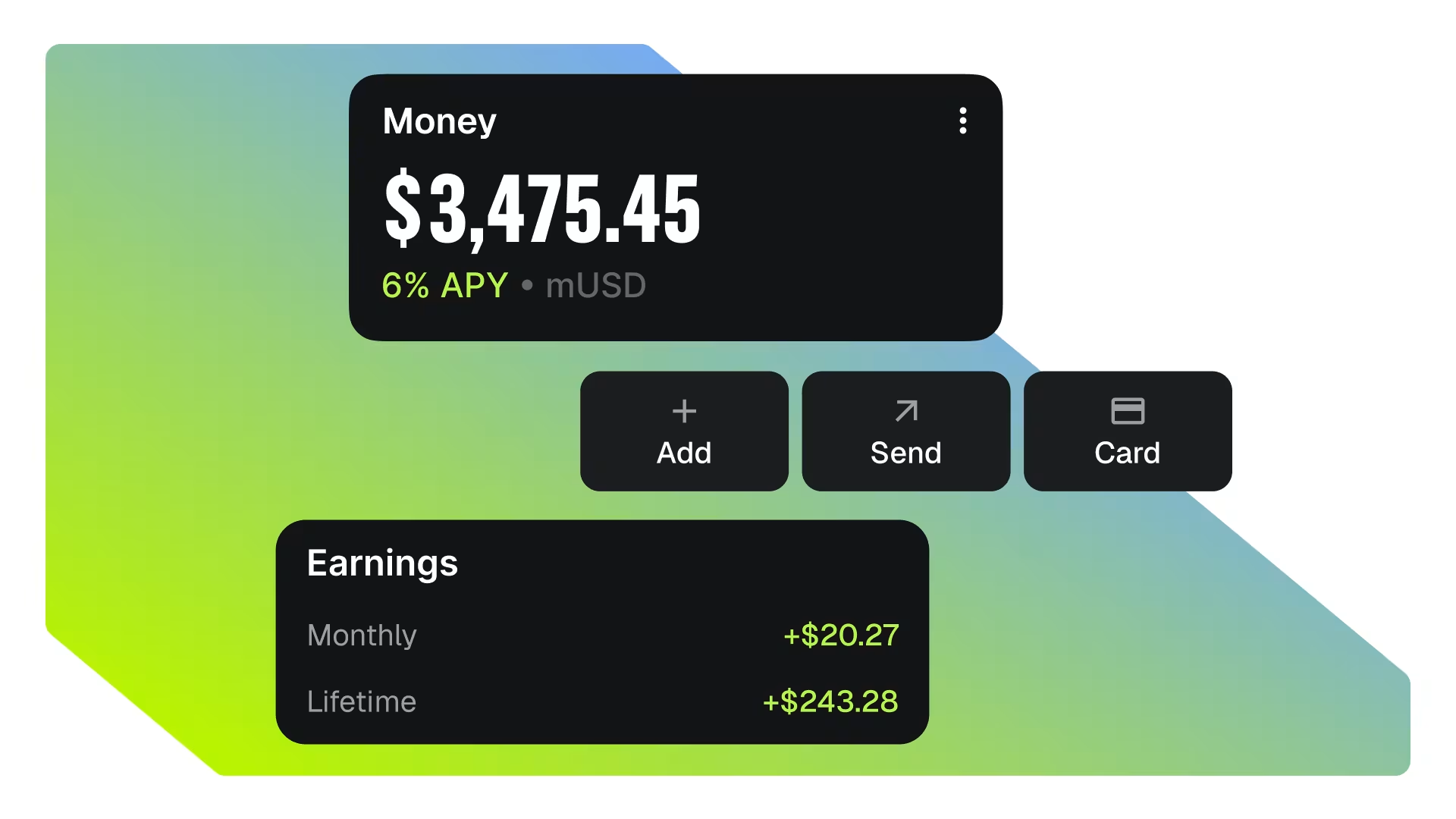
Introducing MetaMask Money Account
Earn up to 6% APY automatically as you trade, send, and spend. Turn your money on.
- GUIDES

Top RWA tokenization platforms
Explore the leading tokenized real-world asset (RWA) platforms by category: treasuries, private credit, gold, equities, and real estate.

