
MetaMask, formerly Consensys Software Inc, is the world's largest self-custodial financial platform, giving people a single place to hold, spend, save and grow their money across both crypto and traditional assets. The company is building the consumer platform where that happens, bringing payments, savings, investing and digital assets together in one seamless experience. Having grown from the world's most widely used self-custodial wallet, MetaMask gives users direct control over their money and assets, with reach across approximately 190 countries. MetaMask has played a foundational role in Ethereum's growth since 2016. Today, MetaMask sits at the center of the blockchain economy, building the operating system for Open Money and putting people in full control of their financial lives.
Read all articles
Bitcoin's total supply is capped at 21 million coins, a limit hardcoded into its network that cannot be changed without consensus from the overwhelming majority of node operators worldwide. As of March 9, 2026, approximately 20 million BTC have been mined, representing 95.24% of all Bitcoin that will ever exist. The remaining supply, fewer than 1 million coins, will enter circulation gradually through mining rewards that halve roughly every four years, with the final fraction of a bitcoin expected around the year 2140. An estimated 3 to 4 million of the coins already mined are believed to be permanently inaccessible due to lost Private Keys and inaccessible Secret Recovery Phrases, according to River Financial's analysis. A separate 2025 analysis by Ledger placed the estimate between 2.3 and 3.7 million BTC. That puts the effective circulating supply—coins that could actually be spent or traded—somewhere between 16 and 17.5 million BTC.
Disclaimer: This guide is for educational purposes only. It is not financial advice, not a solicitation, and not for UK audiences. Bitcoin is risky and not suitable for all users.
Why is Bitcoin's supply capped at 21 million?
Bitcoin's supply limit is the product of two rules embedded in its code: block rewards start at 50 BTC and halve every 210,000 blocks. Adding all the block rewards across every halving cycle produces a geometric series that converges just below 21 million—specifically, 20,999,999.9769 BTC. Bitcoin Core contributor Pieter Wuille has noted that the actual total is slightly lower due to the unspendable genesis block, early bugs, and miners who occasionally claimed less than the full reward. The supply logic is defined in Bitcoin Core's GetBlockSubsidy function.
Satoshi Nakamoto, Bitcoin's pseudonymous creator, explained the reasoning in an email exchange with developer Martti Malmi released during the COPA v Wright trial in February 2024. The choice was described as an "educated guess"—a number large enough to be divisible into useful units (each bitcoin splits into 100 million satoshis) while small enough to be comparable in magnitude to existing currencies if Bitcoin achieved broad adoption. Unlike fiat currencies, where central banks adjust money supply through policy decisions, Bitcoin's issuance follows a transparent, predetermined schedule that every participant can independently verify by running a node.
This design eliminates discretionary monetary expansion. The total number of coins that will ever exist is knowable in advance, and the rate at which new coins enter circulation is predictable to the block.
How many Bitcoin have been mined?
Bitcoin's circulating supply crossed the 20 million mark on March 9, 2026, at block height 939,999—a milestone that placed 95.24% of all Bitcoin that will ever exist into circulation. The remaining 4.76%, roughly 960,000 BTC, will be distributed as mining rewards over the next century.
At the current block reward of 3.125 BTC per block (set by the April 2024 halving), miners add approximately 450 new BTC to the supply each day. That daily rate will drop to roughly 225 BTC per day after the next halving, expected in April 2028. Each subsequent halving pushes the issuance rate lower until the final fraction of a bitcoin is mined around the year 2140.
Milestone | Date | % of supply mined |
First 10 million BTC | November 2012 | 47.6% |
15 million BTC | Early 2017 | 71.4% |
19 million BTC | April 2022 | 90.5% |
20 million BTC | March 9, 2026 | 95.2% |
21 million BTC (final) | ~2140 | 100% |
What is halving and how does it control supply?
Halving is the mechanism that cuts the Bitcoin block reward in half every 210,000 blocks, roughly once every four years. When Bitcoin launched in January 2009, miners received 50 BTC for each block. That reward has since dropped through four halvings: to 25 BTC in November 2012, 12.5 BTC in July 2016, 6.25 BTC in May 2020, and 3.125 BTC in April 2024. The next halving, expected in April 2028, will reduce the reward to 1.5625 BTC.
Each halving makes new Bitcoin scarcer by reducing the rate at which supply enters the market. In Bitcoin's first four years, approximately 10.5 million coins were mined. At today's reward rate, it takes over two years to mine that many coins. By the 2030s, annual new issuance will drop below 100,000 BTC per year.
This declining issuance schedule is what creates Bitcoin's disinflationary monetary policy. The network produces new coins at an ever-shrinking rate, but it never fully stops until the final satoshi is mined. The halvings also shift miner revenue over time—as block rewards shrink, transaction fees become an increasingly important share of total miner income.
For a more detailed treatment of halving mechanics, historical price context, and the 2028 halving outlook, see MetaMask's dedicated Bitcoin halving explainer (forthcoming).
How many Bitcoin are lost forever?
An estimated 3 to 4 million BTC are permanently inaccessible, according to River Financial's analysis of long-dormant blockchain addresses. A separate 2025 analysis by Ledger placed the estimate between 2.3 and 3.7 million BTC, or roughly 11% to 18% of the total 21 million supply. The exact number is impossible to verify because there is no way to distinguish a wallet that is deliberately dormant from one whose Private Key is permanently lost.
The largest single block of presumed-lost coins belongs to Satoshi Nakamoto. Approximately 1.1 million BTC mined in Bitcoin's earliest months sit across roughly 22,000 addresses that have never recorded an outgoing transaction since 2009–2010, according to Sergio Demian Lerner's Patoshi pattern research. These coins are widely assumed to be permanently out of circulation, though their status is technically unconfirmed.
Other notable losses include the QuadrigaCX exchange collapse, where founder Gerald Cotten died in 2018 without sharing access to wallets holding over 1,000 BTC, and James Howells, a UK IT worker who accidentally discarded a hard drive containing approximately 8,000 BTC in 2013—a device he has been attempting to recover from a Welsh landfill for over a decade.
The distinction matters for understanding real scarcity. While over 20 million BTC have been mined, the effective circulating supply, coins that could actually be spent or traded, is likely between 16 and 17.5 million BTC.
How does Bitcoin's supply compare to other assets?
Bitcoin's fixed supply stands in contrast to both fiat currencies and other cryptocurrencies.
Figures as of the dates noted. See linked sources for current data.
Asset | Supply model | Current supply | Cap |
Bitcoin (BTC) | Fixed cap, disinflationary | ~20.04M BTC (Blockchain.com) | 21M (hardcoded) |
Ethereum (ETH) | No fixed cap, net issuance varies via EIP-1559 burn | ~120.7M ETH as of June 2026 (Etherscan) | None |
US dollar (USD) | Discretionary, central bank controlled | M2: ~$2.4677T as of June 2026 (Y Charts) | None |
Gold | Finite but unknown total, ~1.5% annual mine supply growth | ~244,000 metric tonnes above ground as of 2024 (US Gov) | Unknown geological limit |
USDC | Fiat-backed, minted/redeemed on demand | Varies | None |
Central banks expand fiat money supply through lending, bond purchases, and policy tools. Ethereum's supply adjusts dynamically—new ETH is issued to stakers, while a portion of transaction fees is burned under EIP-1559, making net issuance sometimes negative. Gold's above-ground supply grows at roughly 1.5% per year through mining, but its total underground reserves are unknown.
Bitcoin is the only major monetary asset with a supply schedule that is fully known, fully verifiable, and impossible to alter without consensus from the entire network.
Who holds the most Bitcoin?
Bitcoin ownership is concentrated among a mix of early adopters, institutional holders, and exchange reserves. Note: The figures below change frequently.
Corporate treasuries have become an increasingly significant source of demand. Strategy (formerly MicroStrategy) holds 845,426 BTC as of June 2026, making it the largest public company holder by a wide margin. Tether, the company behind the USDT stablecoin, confirmed holdings of more than 140,000 BTC during CEO Paolo Ardoino's keynote at Bitcoin 2026 on April 29, 2026; onchain data from Arkham Intelligence tracks Tether's identified treasury addresses. SpaceX's Form S-1 filed with the SEC on May 20, 2026 disclosed a treasury holding of 18,712 BTC, acquired for a total cost basis of $661 million.
Spot Bitcoin ETFs collectively hold a substantial share of circulating supply. BlackRock's iShares Bitcoin Trust (IBIT), the largest by assets under management since its January 2024 launch, is a primary vehicle for institutional exposure.
These accumulation patterns remove supply from active circulation. Every coin held in a corporate treasury or ETF vault is one fewer coin available on exchanges for other participants—a dynamic that compounds Bitcoin's already constrained effective supply.
What happens when all 21 million Bitcoin are mined?
Miners will earn revenue exclusively from transaction fees once the final block reward is issued, expected around 2140. This transition is gradual—the block reward is already a shrinking share of total miner revenue with each successive halving.
The economic question is whether transaction fees alone will provide sufficient incentive to secure the network. If Bitcoin achieves widespread use as a settlement layer—for large transfers, institutional settlement, or layer-2 channel opens and closes—fee revenue could sustain miner operations. If blockchain transaction volume is low and fees remain small, mining profitability could decline, potentially reducing the network's hash rate and security budget.
This is not a near-term concern. At the current halving schedule, the block reward will still be 0.19 BTC per block in 2048—22 years from now. The transition from block rewards to fee-only revenue will unfold over decades, giving the network time to adapt.
How to verify Bitcoin's supply independently
One of Bitcoin's distinctive properties is that any participant can independently verify the total circulating supply without trusting a third party. Running a full Bitcoin node, software that downloads and validates the entire blockchain, allows independent confirmation that no coins have been created outside the issuance schedule.
MetaMask supports native Bitcoin in the wallet alongside Ethereum and other networks, using the Bitcoin Development Kit for SegWit address support. This allows direct custody of bitcoin without wrapping it as an ERC-20 token; coins sit on the actual Bitcoin blockchain, subject to its supply rules, verifiable by any node on the network.
Block explorers such as Blockchain.com display real-time supply data, including the current block height, reward per block, and total coins mined. These tools make Bitcoin's monetary policy auditable by anyone with an internet connection.

- GUIDES

Champions League prediction markets explained
The 2026-2027 Champions League season trading map: an overview of key prediction markets across the league phase and knockouts, what makes pricing distinct, and what moves volume from the opening match on Sep 8 2026 to the final in Madrid on June 5 2027.
- LATEST
MetaMask Card x Blackbird: Dine like an insider
Restaurant lovers, your card unlocks priority access.
- LATEST
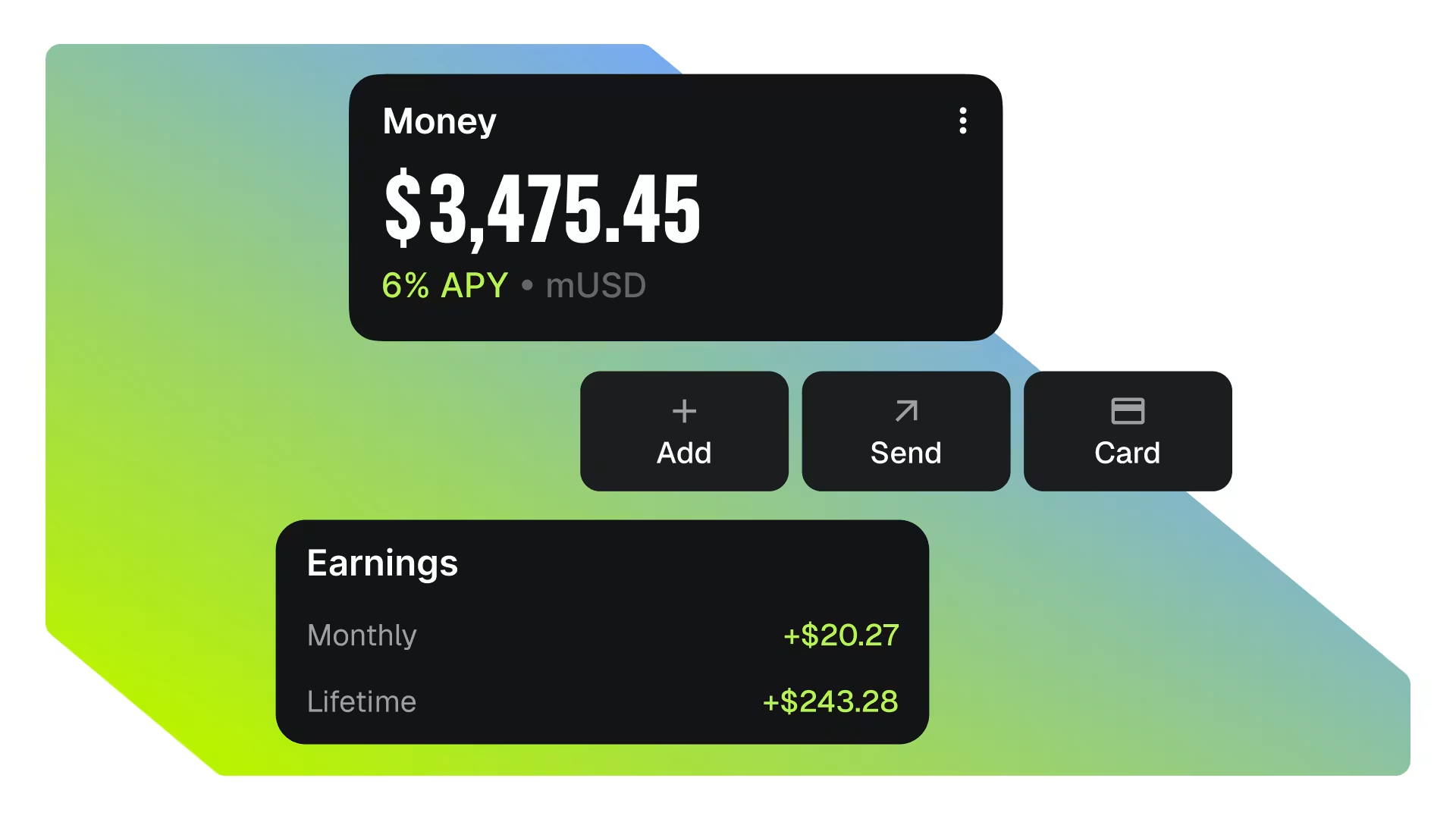
Introducing MetaMask Money Account
Earn up to 6% APY automatically as you trade, send, and spend. Turn your money on.
