
MetaMask, formerly Consensys Software Inc, is the world's largest self-custodial financial platform, giving people a single place to hold, spend, save and grow their money across both crypto and traditional assets. The company is building the consumer platform where that happens, bringing payments, savings, investing and digital assets together in one seamless experience. Having grown from the world's most widely used self-custodial wallet, MetaMask gives users direct control over their money and assets, with reach across approximately 190 countries. MetaMask has played a foundational role in Ethereum's growth since 2016. Today, MetaMask sits at the center of the blockchain economy, building the operating system for Open Money and putting people in full control of their financial lives.
Read all articlesWorld Cup 2026 prediction markets: What matches to watch and how to trade
Over $4.3 billion sits in Polymarket's World Cup Winner market alone as of July 20 2026, with Kalshi's volume for the same market currently at ~$1.8 billion. Here's how football prediction markets price 104 matches across 39 days.

Prediction market trading volume on the 2026 FIFA World Cup surpassed $2 billion before the group stage opened on June 11, 2026. As of July 20, 2026, Polymarket's World Cup Winner contract alone holds more than $4.3 billion in lifetime volume. The tournament was the largest in FIFA history with 48 teams, 104 matches, 39 days, across 16 cities in the US, Canada, and Mexico. That increase in teams over the previous 32-team format produced a corresponding increase in tradable contract inventory across prediction market platforms. This article explains World Cup 2026 prediction markets: how they worked, what was available, and what drove the biggest trading volume.
Disclaimer: This guide is for educational purposes only. It is not financial advice, not a solicitation, and not for UK audiences. Prediction markets are risky and not suitable for all users.
How World Cup 2026 prediction markets work
A prediction market contract is a binary instrument priced between $0.00 and $1.00. Each contract represents a specific outcome, such as whether England wins the World Cup or whether Argentina advances from its group, and the price reflects the market's implied probability. A contract trading at $0.17 implies a 17% chance. If the outcome happens, the contract resolves at $1.00. If it does not, it resolves at $0.00.
Unlike a sportsbook, where the bettor wagers against the house and the operator sets the odds, a prediction market is a peer-to-peer exchange. Traders buy and sell contracts against each other on a central limit order book (an order-matching system that shows the available buy and sell orders at each price). The price reflects aggregated trader conviction rather than a bookmaker's margin.
Contracts can also be sold before resolution. A trader who bought a contract at $0.10 and saw it rise to $0.25 after a group-stage result can sell the position and take the difference without waiting for the tournament to end. For a fuller walkthrough of pricing, order matching, and resolution, see how prediction market pricing works.
What's tradable in World Cup prediction markets
As of July 20, 2026, Polymarket listed 39 World Cup markets, while Kalshi, DraftKings Predictions, and ADI PredictStreet (FIFA's official prediction market partner) added further coverage. The main contract categories broke down as follows.
Contract type | What it covers | Polymarket | Kalshi |
Outright winner | Which national team wins the 2026 World Cup | As of July 20, 2026, Polymarket's World Cup Winner market : Spain 58%, Argentina 42% going into the final; Spain won 1-0 | As of July 20, 2026, Kalshi's World Cup Winner market : Spain 58.2%, Argentina 41.8% going into the final; Spain won 1-0 |
Group stage winners | Which team finishes top of a given group. For example, who won Group L? | As of July 20, 2026, | As of July 20, 2026, |
Match outcome | Win, draw, or loss markets for a specific fixture, hundreds of markets. For example, Uruguay vs Spain winner | As of July 20, 2026, | As of July 20, 2026, |
Player props | Individual performance and player head to head matchups. For example, who won the Golden Boot | As of July 20, 2026, Messi and Mbappé led the Golden Boot market on Polymarket; Mbappé won it on 10 goals | As of July 20, 2026, Messi and Mbappé led the Golden Boot market on Kalshi; Mbappé won it on 10 goals |
Advancement | Whether a team reaches a given round. For example, World Cup nation to reach the quarterfinals | As of July 20, 2026, France, Morocco, Spain, Belgium, Argentina, Switzerland, Norway, England reached the quarterfinals | As of July 20, 2026, France, Morocco, Spain, Belgium, Argentina, Switzerland, Norway, England reached the quarterfinals |
The outright winner drew the most volume. Polymarket's World Cup Winner market closed with more than $4.3 billion in volume, the single largest World Cup contract by volume on either platform.
Current World Cup prediction market favorites
Going into the final on July 19, 2026, Polymarket's World Cup Winner market and Kalshi's World Cup Winner market priced the two finalists within roughly 1 percentage point of each other.
Team | Polymarket implied probability (before the final) | Kalshi implied probability (before the final) |
Spain | 58% | 58.2% |
Argentina | 42% | 41.8% |
Spain won 1-0 in extra time, resolving the contract at $1.00 on Spain and $0.00 on Argentina. Throughout the tournament these probabilities changed continuously as results came in: a single upset could reprice the outright winner market, the group winner markets, and related match markets at once. For more on how price movement and information cascades affect contract prices, the same patterns apply across sports markets.
Prediction markets vs sportsbooks for World Cup betting
The World Cup has drawn trading activity across both prediction markets and traditional sportsbooks, but the two models work differently. For anyone evaluating where to follow or trade on World Cup outcomes, the structural differences matter.
Feature | Prediction markets | Traditional sportsbook |
Counterparty | Other traders | The bookmaker |
Price discovery | Supply and demand on an order book | Set by the operator with built-in margin |
Position management | Contracts can be bought and sold at any time before resolution | Typically locked in at placement |
Settlement | Smart contract or platform escrow, based on verified outcomes | Operator pays from balance sheet |
Transparency | Onchain order flow (on crypto-native platforms) or visible order book | Operator's internal book, not public |
Fee structure | Trading fees on execution (varies by platform) | Built into the spread as "vig" or "juice" |
Availability | Available in 40+ US states (varies by platform) | Legal in ~38 US states |
The ability to exit a position before resolution is one of the structural differences that makes prediction markets function more like financial exchanges than traditional betting. A contract purchased at $0.08 on a long-shot team that wins its opening group stage match could trade at $0.15 after the result—allowing the holder to sell at a profit without the team needing to win the tournament.
Prediction markets also eliminate the house edge embedded in sportsbook odds. The counterparty is another trader, not an operator calculating margins. Fees tend to be lower than the typical 5–10% "vig" sportsbooks charge, though individual platform fee structures vary. For more on how fees, spreads, and costs work across prediction market platforms, see 5-cent spreads: liquidity, costs, and signals.
How the 2026 World Cup’s expanded 48-team format changes the markets
Previous World Cups (1998–2022) featured 32 teams and 64 matches. The 2026 edition expanded to 48 teams in 12 groups of four, with the top two from each group plus the eight best third-placed teams advancing to a new Round of 32, according to FIFA. That structure changed prediction market behavior in three ways.
The outright winner market became more diffuse. With 48 teams instead of 32, probability spread across more contenders. By the final, that spread had narrowed to two: Spain at 58% and Argentina at 42%.
Group-stage markets created earlier liquidity. Twelve groups meant 72 group-stage matches, each with its own contracts for match outcomes, group winners, and advancement. The compressed schedule (June 11–June 27 2026) ran several matches at once, so prices across related contracts updated in parallel as results arrived.
Third-place advancement added a new contract layer. Because the eight best third-placed teams also advanced, a team could lose its group and still qualify, so advancement contracts held residual value even after a group-stage loss. That dynamic did not exist under the old format.
Why institutional interest is rising
The scale of World Cup trading drew broader analyst attention. A RotoWire analysis projected more than $2.37 billion in World Cup trading volume across US prediction markets, benchmarked against Super Bowl trading patterns. The actual figure cleared that several times over: Polymarket's World Cup Winner market alone closed with more than $4.3 billion, which positions the 2026 World Cup among the largest prediction market events to date.
How spreads and liquidity shift during the tournament
Prediction market liquidity is not static. It shifts with the event timeline, public attention, and the number of active contracts competing for capital.
Before kickoff, trading concentrates in the top five or six outright contenders, and longer-shot teams show wider bid-ask spreads (the gap between the highest price a buyer will pay and the lowest a seller will accept). Group-stage results then trigger rapid repricing across multiple contract types at once. As teams are eliminated in the knockout rounds, capital migrates into the remaining markets, and the semifinal and final contracts usually show the tournament's deepest liquidity and tightest spreads.
For traders watching live events, the quoted spread and the effective spread can differ: a thin order book can still produce slippage (the difference between the expected execution price and the price actually received) on larger orders. The mechanics of reading spread depth are covered in 5-cent spreads: liquidity, costs, and signals.
Risk factors for World Cup prediction markets
Several risks are specific to tournament prediction markets, and they matter for anyone evaluating a position.
Liquidity concentration: not all markets carry equal depth. Outright winner and marquee match contracts tend to have deep order books, while niche player props or lower-profile group matches can show thin liquidity and wider spreads.
Information asymmetry during live matches: prices move in real time as match events unfold. Injuries, red cards, and goals can trigger rapid swings, and traders with faster access to match feeds may hold a timing advantage over those watching a delayed broadcast.
Resolution risk: contracts rely on oracles (services that feed external data to smart contracts onchain) or platform-specific resolution processes. Most World Cup markets on Polymarket resolve on official FIFA results. Edge cases such as disputed goals or after-the-fact disqualifications could complicate resolution on any platform.
Regulatory variation: availability differs by jurisdiction. Polymarket's US access remains limited, while Kalshi operates as a CFTC-regulated designated contract market. DraftKings Predictions operates as a legal sports trading product in a number of US states. Regulatory status can affect which markets are available in each region.
How to trade World Cup prediction markets
Leading self-custodial wallet MetaMask provides native access to Polymarket prediction markets, including World Cup contracts. Any token on any EVM blockchain network can be used to fund a predictions account, and six tokens are accepted directly from the wallet for placing predictions without an additional bridging step. The self-custodial structure means the trader retains control of their Private Key throughout the process. Contracts are placed from the wallet rather than requiring a deposit into a centralized platform account.
The step-by-step process for placing a prediction on MetaMask Mobile covers funding, contract selection, and claiming resolved positions. For new traders, the guide to key prediction market concepts covers the basics of pricing between $0 and $1, buying and selling shares, and how resolution works.
What to watch as the tournament progressed
The group stage ran June 11–27 2026 across 72 matches, and the tournament was single-elimination from the Round of 32 onward, beginning June 28. The quarterfinals ran July 9–11 and the semifinals July 14–15, leaving Argentina and Spain to meet in the final on July 19 2026 at MetLife Stadium in New Jersey, per FIFA's match schedule, where Spain won 1-0 in extra time. The winner contract resolved at $1.00 on Spain and $0.00 across the rest of the field.
Key World Cup 2026 dates for prediction market traders
Phase | Dates | Matches | Market impact |
Group stage | June 11–27 2026 | 72 | Highest flow of new information; prices moved across all contract types |
Round of 32 | June 28 – July 2 2026 | 16 | Half the field eliminated; capital concentrated into surviving teams |
Round of 16 | July 3–6 2026 | 8 | Major repricing as contenders met directly |
Quarterfinals | July 9–11 2026 | 4 | Outright winner narrowed to eight teams; spreads tightened |
Semifinals | July 14–15 2026 | 2 | Near-binary pricing on the remaining contenders |
Final | July 19 2026 | 1 | The winner contract resolved at $1.00 on Spain |
For context on the broader prediction market trends beyond the World Cup, including how sports, politics, crypto, and macro categories are evolving across platforms, see prediction market trends in 2026.
- GUIDES
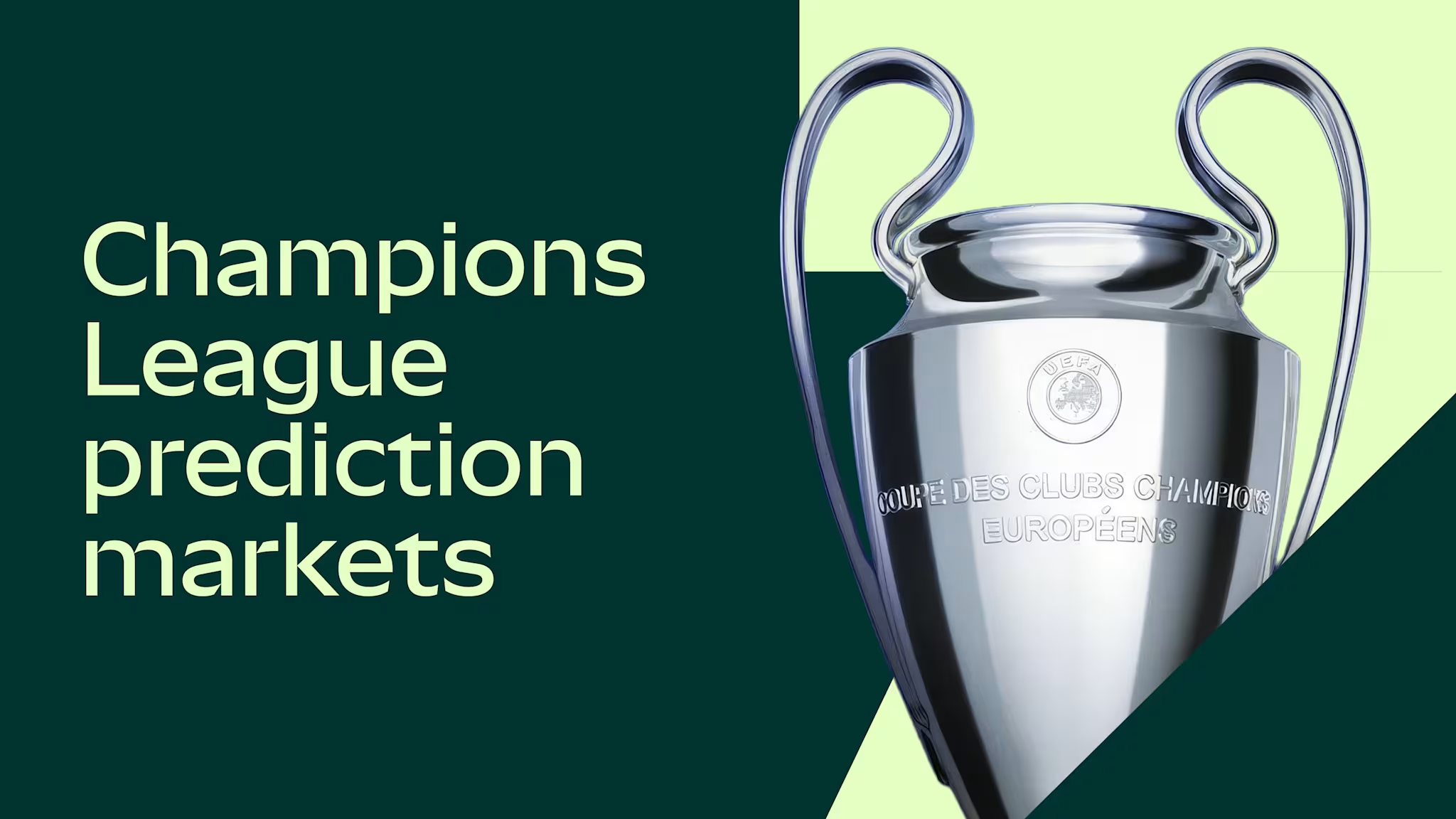
Champions League prediction markets explained
The 2026-2027 Champions League season trading map: an overview of key prediction markets across the league phase and knockouts, what makes pricing distinct, and what moves volume from the opening match on Sep 8 2026 to the final in Madrid on June 5 2027.
- LATEST

MetaMask Card x Blackbird: Dine like an insider
Restaurant lovers, your card unlocks priority access.
- LATEST
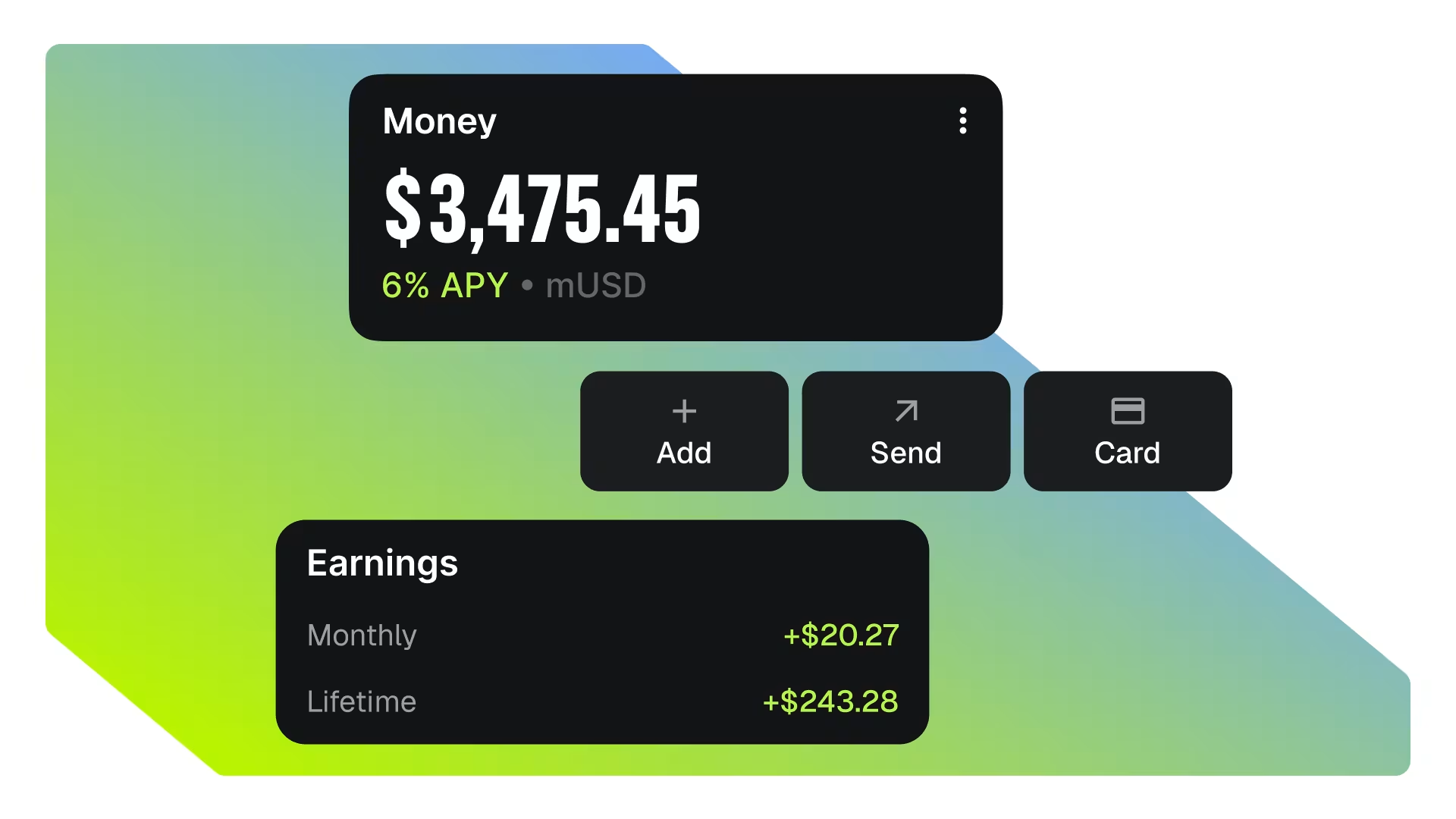
Introducing MetaMask Money Account
Earn up to 6% APY automatically as you trade, send, and spend. Turn your money on.

