
MetaMask, formerly Consensys Software Inc, is the world's largest self-custodial financial platform, giving people a single place to hold, spend, save and grow their money across both crypto and traditional assets. The company is building the consumer platform where that happens, bringing payments, savings, investing and digital assets together in one seamless experience. Having grown from the world's most widely used self-custodial wallet, MetaMask gives users direct control over their money and assets, with reach across approximately 190 countries. MetaMask has played a foundational role in Ethereum's growth since 2016. Today, MetaMask sits at the center of the blockchain economy, building the operating system for Open Money and putting people in full control of their financial lives.
Read all articles
US election prediction markets let traders take positions on the outcome of political events—individual seat races, which party controls the Senate, which party controls the House, who becomes the next US president—by trading contracts that pay out based on the result. Each contract is priced between $0 and $1, and the price reads as the market's live estimate of how likely the outcome is. A contract that resolves correct settles at $1; one that resolves wrong settles at $0. Because that price updates continuously as money moves in and out, an election market behaves like a running probability gauge rather than a single poll taken on one day. For the mechanics of pricing and settlement that apply to every prediction market, see how prediction market pricing works, and for the terminology, see prediction markets concepts and terminology.
Disclaimer: This article is for educational purposes only. It is not financial advice, not a solicitation, and not for UK audiences. Prediction markets are risky and not suitable for all users.
Common types of US election prediction markets
US election markets split into 5 distinct types, each a $0–$1 contract that can be traded out of before it resolves:
Chamber control (balance of power): contracts on which party controls the Senate or the House after the election. These are the headline markets in a midterm year. Each one aggregates the outlook across every contested seat into a single chamber level probability, so "Democrats control the Senate" is effectively a weighted sum of the individual races that decide the majority.
Individual races: contracts on the winner of a single Senate, House, or gubernatorial seat. These are where the chamber control number ultimately comes from, and the closest ones—the true battlegrounds—carry the most volume and move the overall control markets the most.
Overall presidential winner: in a presidential year, the market on who wins the White House, often the single largest prediction market of the cycle. Related markets cover the popular vote, party nominees, and individual swing states.
Vote margins and popular vote: contracts on a candidate's margin or the popular vote gap, for traders taking a view on the size of a result rather than just the winner.
Turnout: contracts on whether official turnout clears a set threshold.
Market type | What it settles on | When it resolves |
Chamber control | Which party holds the Senate or House | After the election is called |
Individual race | Winner of a single seat | When that race is called |
Presidential winner | Who wins the White House | When the race is called |
Vote margin / popular vote | A candidate's margin or the popular vote gap | After certified results |
Turnout | Whether turnout clears a threshold | After official turnout data |
US election prediction market regulatory history
For more than a decade, trading on the outcome of political events, including elections, was prohibited within the US. In 2022, Kalshi first sought to list contracts tied to which party would control Congress, and resubmitted them in June 2023. On September 22, 2023, the Commodity Futures Trading Commission, or CFTC, prohibited them, finding the contracts involved gaming and activity unlawful under state law, so they fell outside what a regulated exchange could list.
Kalshi sued, and on September 6, 2024, US District Judge Jia Cobb granted summary judgment for Kalshi, finding that the CFTC had overstepped: elections, the court held, are neither unlawful activity nor gaming, so the agency had no authority to block the contracts. Her full opinion followed on September 12, 2024. Kalshi listed its congressional control contracts on September 12, 2024, and they traded for about eight hours before the appeals court paused them.
The CFTC appealed on September 12, 2024, and the DC Circuit paused trading with an administrative stay that same day, lifting it on October 2, 2024, letting the markets run through the election. After the appeals ruling, Kalshi capped positions at $7 million per contract for individuals and $100 million for eligible contract participants such as corporations and investment firms. In May 2025 the CFTC dropped its appeal, and the DC Circuit dismissed it on May 7, 2025, leaving the district court's decision in Kalshi's favor standing. The result is that election event contracts are tradable on US venues regulated by the CFTC today.
The 2024 US presidential election and prediction markets
The 2024 US presidential election drew historic trading volume. On Polymarket, a blockchain platform that was not open to US users at the time and has since launched a separate US exchange regulated by the CFTC, the presidential winner market drew ~$3.69 billion in total volume as of September 2026, the largest election market on Polymarket to date and second only to its World Cup Winner market overall.
For most of the campaign, traditional polling had the US presidential race close to even, while Polymarket favored Donald Trump, putting him at ~58% likely to win vs Kamala Harris's ~42% on the eve of the vote. On election night the market also moved faster than the major networks, reaching ~97% implied chance of a Trump win by midnight, hours before those networks called the race, per Polymarket's market data.
That result fueled a "trust the markets, not the polls" narrative on social media. However, this comes with caveats. A price is not a poll; it reflects where money has been placed, not a representative sample of voters. A user base weighted toward crypto traders can also skew the sample toward one side. Separately, a 2026 arXiv analysis by Tsang and Yang of the 2024 Polymarket market found that price impact was high in the market's early months, and that naive blockchain totals double count trades, more than doubling October volume on the Trump market to $958 million against $391 million after correction. A market being right once is not proof it will be right next time.
2026 US midterm election prediction markets
As of November 2026, Democrats won control of both the Senate and the House. Polymarket's Senate control market resolved to the Democratic Party after drawing ~$31.5 million in volume, and its House control market did the same after ~$63.3 million, , and its balance of power market resolved to a Democratic sweep after ~$75.7 million. NBC News counted 54 Democratic Senate seats to 44 Republican, a net gain of 7, with Alaska and Mississippi uncalled, and 242 Democratic House seats to 146 Republican, a net gain of 35, with 47 races uncalled.
This repricing traces back to the individual races underneath. Markets related to which party controls the Senate or House of Representatives reflect aggregate results, and typically shift when battleground seats move or are decided. Polymarket's highest volume Senate races as of September 2026 were Maine, Texas, Michigan, Alaska, Ohio, Iowa, and Nebraska—the seats most likely to decide the majority. When a poll shifts one of these state results, the broader chamber level contract reprices to match. On election night, Democrats won Maine, Texas, Michigan, Ohio, and Iowa, while Republican Senator Pete Ricketts held Nebraska. As of November 4 2026, Alaska was still uncalled, with Polymarket pricing Democrat Mary Peltola at ~92% likely to win.
The table below compares Polymarket's prices on the eve of the vote with the results of the chamber control markets and the seven highest volume Senate races.
Market | Political race | Polymarket odds on Nov 3, 2026 | Result after Election Day (Nov 4, 2026) |
Senate control | Democrats vs Republicans | Democrats ~76% | Democrats won control of the Senate |
House control | Democrats vs Republicans | Democrats ~95% | Democrats won control of the House |
Maine Senate | Troy Jackson (Democrat), vs Senator Susan Collins (Republican) | Jackson ~74% | Jackson won, a Democratic flip |
Texas Senate | James Talarico (Democrat), vs Ken Paxton (Republican) | Talarico ~73% | Talarico won, a Democratic flip |
Michigan Senate | Abdul El-Sayed, (Democrat) vs Mike Rogers (Republican) | El-Sayed ~79% | El-Sayed won, a Democratic hold |
Alaska Senate | Mary Peltola (Democrat) vs Senator Dan Sullivan (Republican) | Peltola ~73% | Votes still being counted |
Ohio Senate | Sherrod Brown (Democrat) vs Senator Jon Husted (Republican) | Brown ~72% | Brown won, a Democratic flip |
Iowa Senate | Josh Turek (Democrat), vs Ashley Hinson (Republican) | Turek ~51% | Turek won, a Democratic flip |
Nebraska Senate | Sen. Pete Ricketts (Republican) vs Dan Osborn (Independent) | Ricketts ~72% | Ricketts won, a Republican hold |
What causes US election contract prices to move?
New polling in a battleground state frequently shifts contract prices before an election, because it feeds straight into the individual race contracts that aggregate into chamber control. Candidate news—a strong debate, a scandal, a retirement, or a primary upset—can reprice a single race sharply. Broader shocks, from economic data to geopolitical events, can shift the national mood and move many races at once. And as election night unfolds, early results in noncompetitive areas let traders infer trends in the states still counting, which is why market prices can lead media calls by hours.
The closer a market sits to a coin flip, the more its price swings on new information; a race already priced near $0.05 or $0.95 barely moves on the same news that would jolt a genuine toss-up. For why contracts priced near even are the most volatile and how spreads widen around them, see 5-cent spreads: liquidity, costs, and signals.
Where and how election markets trade
US election markets can be traded on prediction platforms, such as Polymarket or Kalshi. Some self-custodial wallets also offer native prediction market integrations: For example, MetaMask predictions are powered by Polymarket and can be traded directly from the mobile app. Prediction market regulations differ by platform and region or state. See MetaMask Prediction Markets for a broader overview of how these contracts work, and top prediction market categories 2026 to find out where political markets sit alongside other popular categories like sports, crypto, and finance.

- LATEST

MetaMask Card x Blackbird: Dine like an insider
Restaurant lovers, your card unlocks priority access.
- LATEST
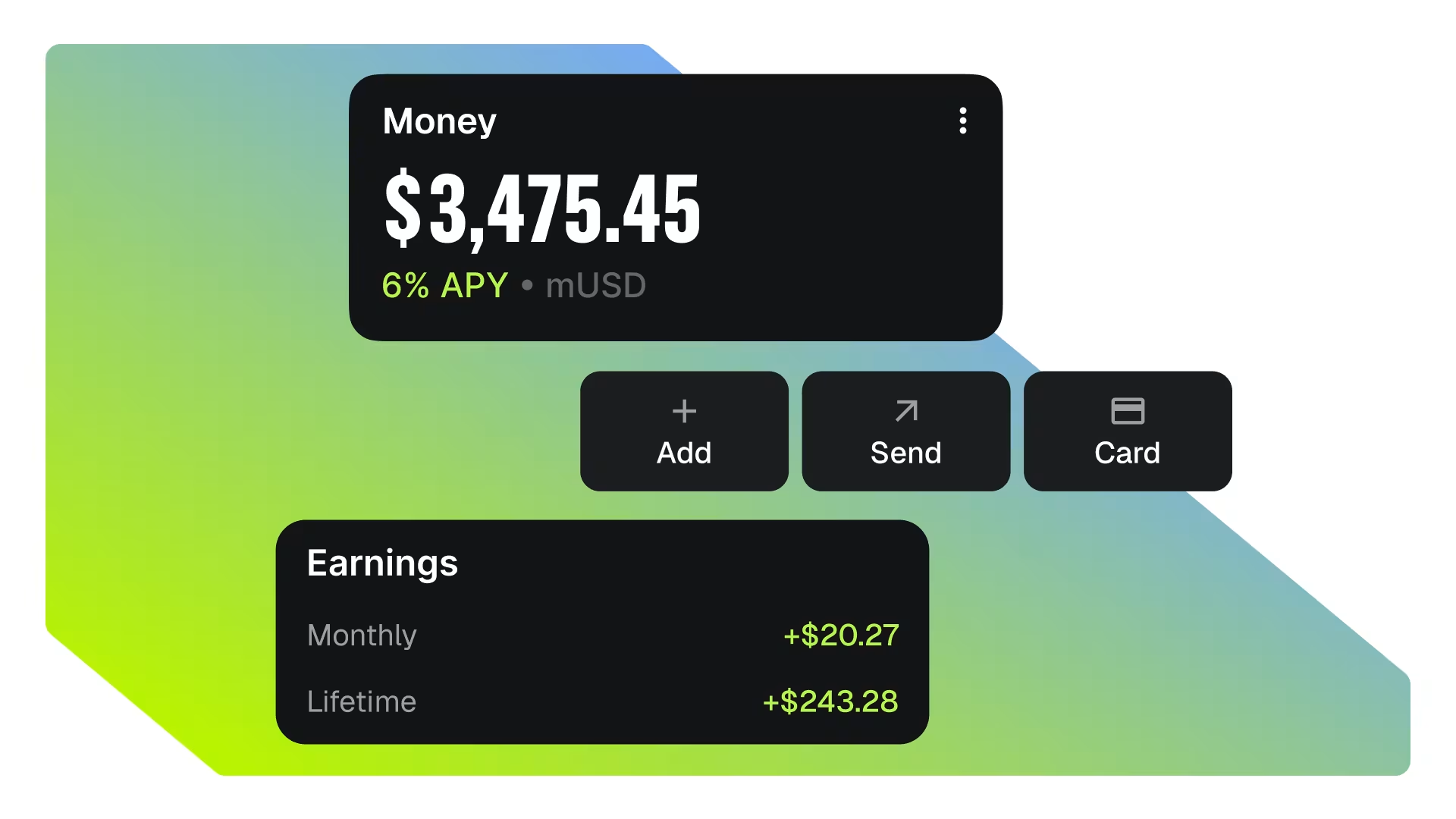
Introducing MetaMask Money Account
Earn up to 6% APY automatically as you trade, send, and spend. Turn your money on.
- ALPHA

Anthropic's IPO range is $70–$78; onchain markets are pricing above it
With the AI IPO roadshow underway, reports say it's oversubscribed multiple times. The pre-IPO perp is moving, and Polymarket odds have moved toward pricing above the range.

