Skip to content

Uniswap

Uniswap
UNI
Contract address
0x1f98...01f984
Copy UNI contract address
$6.01
-$0.4392(-7.31%)Today
Market cap
3.65bn
Total volume (24h)
492.43m
Volume / Market cap
0.1347
Circulating supply
607.72m
Day range (24h)
$6.03$6.66
All-time low
$1.03
All-time high
$44.92

About Uniswap (UNI)

Uniswap is a decentralized exchange (DEX) for cryptocurrencies that was launched in November 2018 by Hayden Adams on Ethereum mainnet. A DEX lets you trade tokens directly via open-source smart contracts, eliminating the need for a centralized exchange (CEX) or intermediary, like a bank. In the case of Uniswap, you can trade (aka swap) tokens that are ERC-20, and therefore compatible with the Ethereum Virtual Machine (EVM). 

Uniswap uses an Automated Market Maker (AMM) in lieu of traditional finance (TradFi) order books. Users add tokens to liquidity pools on the platform. In return for being a liquidity provider, you can earn a share of trading fees. When you want to trade tokens, Uniswap smart contracts calculate the exchange rate based on relative amounts tokens in the liquidity pool.

The native cryptocurrency of Uniswap is UNI, a utility token that is largely used for governance purposes. Holders of UNI can vote on decisions about the development and management of Uniswap. You can’t pay transaction fees with UNI. When trading, transaction fees are paid in the tokens being swapped.

UNI token holders are typically active DeFi investors and crypto protocol participants.

Price history

Today (12 November 2026)$6.01-7.31%
24 hours ago (11 November 2026)$6.48-7.31%
1 week ago (5 November 2026)$7.40-18.77%
1 month ago (13 October 2026)$7.24-17.01%
1 year ago (12 November 2025)$8.61-30.22%

Calculator

UNI market moves

Powered by MetaMask Market Insights


24h change: -3.69%. From $6.82 to $6.57.

  • Uniswap Labs and the Uniswap Foundation jointly proposed and executed changes known as UNIfication. These turn on protocol fees across Uniswap v2, v3, and v4 pools, route them to burn UNI, and include a retroactive burn of 100 million UNI from the treasury. The proposal also restructures teams, creates an annual growth budget of 20 million UNI, and positions the protocol as an onchain aggregator for broader liquidity including tokenized assets. This creates a direct link between trading volume and reduced UNI supply.
  • Aggregator hooks are now live, allowing Uniswap v4 to incorporate external liquidity sources such as those from Curve, PancakeSwap and Fluid while collecting protocol fees that support UNI burns. The protocol has also hosted its first permissioned asset with a tokenized real estate stake. These changes expand Uniswap’s capabilities for tokenized securities and real-world assets under compliance rules while increasing the fee base that contributes to token burns.

24h change: -1.12%. From $6.92 to $6.84.

  • The UNIfication governance proposal activated a fee switch that routes a portion of Uniswap trading fees to burn UNI tokens on an ongoing basis. A one-time burn of 100 million UNI was also executed from the treasury. Aggregator hooks now extend this model by capturing fees from external liquidity sources routed through v4 pools. TJAR, the onchain fee conversion tool, further supports efficient revenue handling across apps and chains.
  • Aggregator hooks are now live on Ethereum, Base, and Robinhood Chain, allowing v4 to route trades through external liquidity while collecting protocol fees. Uniswap v4 launched as a day-one application on Hyperliquid's Elysium L2 with hooks support confirmed. These moves broaden liquidity access and position Uniswap across high-performance networks. Developer analytics and additional hooks like VolatilePair further enhance the protocol stack.
  • Uniswap recorded its largest single-day addition of new addresses since 2020 along with one-year highs in daily active addresses. On-chain data showed approximately $3.1 million in net inflows to UNI. High trading volumes continue on Robinhood Chain, where Uniswap serves as the primary AMM with significant tokenized asset activity. These developments coincide with broader multi-chain expansion and institutional interest signals.

24h change: -0.92%. From $6.99 to $6.93.

  • Uniswap has confirmed support for its v4 hooks on Elysium, a Hyperliquid layer-2 network whose mainnet launches on November 9 2026. Hooks enable developers to add custom logic such as dynamic fees, directional pricing, and permissioned access to individual liquidity pools. This integration expands Uniswap's programmable DeFi capabilities to the new chain and aligns with broader efforts to increase protocol usage across ecosystems. The move builds on recent aggregator hooks that route external liquidity and contribute to UNI burns.
  • GromaCorp has launched a permissioned GRO/USDC pool on Base that allows verified investors to issue and redeem tokenized real estate shares directly on Uniswap at net asset value. The implementation uses the Permissioned Pools Hook to enforce compliance checks separately for swaps versus liquidity provision. This represents the first live permissioned asset on the protocol and demonstrates infrastructure for regulated real-world assets in DeFi. The launch follows the July 2026 introduction of permissioned pool capabilities and expands Uniswap's role beyond traditional crypto trading.
  • Uniswap Labs posted a request for comments on November 6 for upgrading the VolatilePair hook on Ethereum and updating the protocol fee releaser on X Layer to support AggLayer. These changes are part of routine infrastructure maintenance following unification and fee activation. The proposals are expected to advance to Snapshot vote around November 13. Such updates ensure continued functionality for dynamic fees and cross-chain operations while supporting ongoing UNI burns from protocol revenue.

24h change: -0.19%. From $7.02 to $7.01.

  • Uniswap launched aggregator hooks on Ethereum, Base, and Robinhood Chain in late October 2026. These hooks wrap external liquidity from platforms including Curve, PancakeSwap, and Fluid, turning them into v4 pools. Trades routed through them pay protocol fees that contribute to UNI burns via the TokenJar and Firepit mechanisms. This strengthens Uniswap's position as a DEX aggregator and improves value accrual for the UNI token.
  • Uniswap Labs released TJAR, an open tool that lets applications convert fees collected in any token into their preferred token through open incentives. Robinhood is the first major integration partner. The system uses UNI payments to searchers, with those UNI tokens burned. This builds on the activated protocol fee switch and expands Uniswap's infrastructure for broader DeFi use.
  • Uniswap v4 hooks support is confirmed for Elysium, a Hyperliquid layer-2 mainnet launching November 9, 2026. This enables dynamic fees, custom logic, and tokenized asset pools. Recent deployments also include permissioned pools for real estate tokenization. These moves extend Uniswap's technical capabilities into new ecosystems and real-world asset use cases.

24h change: +0.69%. From $6.95 to $7.00.

  • Uniswap Labs posted a requests-for-comment on November 6 for upgrading the VolatilePair hook on Ethereum and updating the protocol fee releaser on X Layer to support AggLayer. These changes are part of routine governance upkeep for Uniswap v4 infrastructure. The proposals are expected to advance to Snapshot vote around November 13. The updates aim to improve functionality for dynamic fees and cross-chain fee handling.
  • GromaCorp launched real estate issuance and redemption directly on the Uniswap AMM using the Permissioned Pools Hook. This represents the first live permissioned asset on the protocol with compliance enforced at the protocol level. It builds on earlier v4 hook development for tokenized real-world assets. The move expands Uniswap's role beyond traditional crypto trading into regulated onchain markets.
  • Security firm GoPlus reported an exploit targeting unpatched older iOS versions that drained private keys from self-custody wallets. One affected case involved the Uniswap Wallet with total estimated losses around $561,000 across incidents. The vulnerability is isolated to user devices and does not affect the Uniswap protocol or smart contracts. It serves as a reminder for users to maintain updated software and secure self-custody practices.

Start swapping

Get UNI in seconds

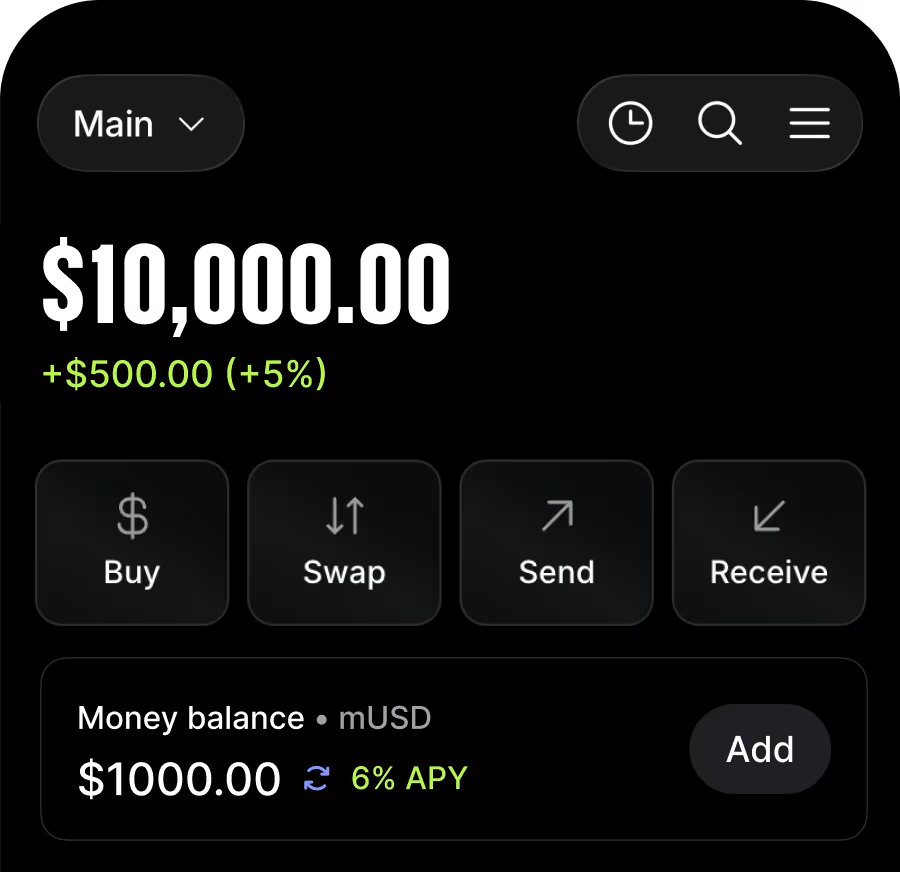
Buy, sell, trade, and swap UNI on MetaMask, crypto's most trusted wallet.

Ready to try MetaMask?

Token Page Template > CallToActionFullBleed > Asset